Nonprofits need to be clear about the problems they address, and they need people to understand their purpose, work, and approach the way they do. An organisation may work with communities for years, but if only the people directly associated with it know about that work, others can’t learn from its experience or draw on its insights.
Social enterprises working in rural areas face a similar problem. An enterprise may make a good product, but if customers can’t see what sets it apart, they will struggle to build a distinct identity in the market.
In both cases, the question is how people recognise an enterprise, and why they choose to engage with it. The answer lies in branding.

People often link branding with a logo, colours, design, or publicity, but for enterprises, specifically those in rural areas, it means much more. Branding makes an enterprise’s identity clear, so that people understand its purpose, values, ways of working, and credibility. A logo and visual identity help communicate this identity, but they are only one part of what defines a brand.
The basic difference between branding and communication
Social enterprises often confuse branding with communication. The two are closely connected, but they serve different purposes. Branding defines what an enterprise is, what purpose it serves, what sets it apart, and how it wants people to recognise it. Communication carries that identity to people through different channels and interactions.
Two enterprises from our Climate Livelihoods programme, which we run with the SELCO Foundation, show the difference. Sri Sharada Home Foods in Karnataka and Trinayan Gramin Food Products in Assam introduced new products after they had prepared their flyers and labels. Customers already recognised the enterprises and their products, so the brands didn’t need to change. The enterprises only had to update their communication, and the revised flyers featured the new products under the same brand identity.
Branding therefore goes beyond how an enterprise presents itself to the outside world. It helps define its identity and stay consistent across different aspects of its work. This clarity allows an enterprise to introduce a new product, update a flyer, or publish a social media post without losing its distinct voice.
Be clear about your identity and who you work for
Before getting started with branding, every social enterprise should reflect on a few fundamental questions about its identity, purpose, and the direction of its work. The first question is what problem your organisation or enterprise works on and how it approaches it. Many organisations work on education, health, livelihoods, the environment or women’s empowerment, but working on an issue doesn’t by itself give an enterprise a distinct identity. An enterprise needs to be clear about how it understands the problem and what methods it uses to address it.

The second question is what sets your enterprise apart from others. The difference may come from a deep understanding of a particular area, the way it works with communities, its support for local leadership, or long experience in a subject. Answering this question means recognising the enterprise’s expertise and contribution, rather than claiming that it is better than others.
The third question is what you want people to remember about your enterprise. If a community member, funder or potential partner remembers only one thing about it, what should that be? Thinking this through can help an enterprise articulate its identity simply and clearly.
The fourth question is whether others see your enterprise the way you see it yourself. An enterprise may be clear about its identity, but the community, partners and funders may perceive it differently. So besides discussing this within the team, it should ask the people it works with for feedback.
We worked through these questions in two phases with nonprofits in a capacity-building cohort in Tamil Nadu, which we supported together with Dhwani Foundation.
In the first phase, before any design work began, each social enterprise answered a few short questions in its own language. We asked how it had presented itself so far, what its purpose was, who it worked for, whether it had a tagline and what language it worked in. The responses helped us understand where each enterprise was starting from and how it saw itself.
In the second phase, the orientation opened with one question: “When people hear your enterprise’s name, what is the one feeling you want them to have?”
We then asked the enterprises to reflect on their existing communication materials, such as banners, standees, and documents. As the enterprises discussed these materials, we tried to understand what message they conveyed and whether that message aligned with the feeling the enterprise wanted to create in people’s minds.
Reflecting on these questions can help you lay the foundation for branding. Without clarity on them, social media work might give the enterprise an attractive image while its identity stays unclear.
Logos and visual identity
Visual identity is an essential part of an enterprise’s brand. Its name, logo, colours, fonts, photography style and document design help people recognise it, and using them consistently makes recognition easier. But branding is more than a consistent look; it is also about building a clear and credible understanding of what the enterprise stands for.
During a bootcamp we organised, an entrepreneur from Karnataka approved the first draft of her logo. After the bootcamp, she came back to us. Having seen the logos of other enterprises and heard fellow entrepreneurs talk about what their brands meant to them, she began to understand how a logo could tell a deeper story about her identity and work. She now wanted her own photograph to be part of her logo. It may seem like a small design change, but it shifted how she thought about and spoke about her enterprise. Changes like these often emerge during training sessions and peer conversations. They may not show up in a routine training report, but they reveal how people begin to understand and express their own identities.
Make your groundwork part of your brand identity
Many social enterprises treat their fieldwork and communication as separate activities. Field teams work with communities, and communications teams later gather information from them to develop stories, reports and social media posts. This often means that important aspects of the work, such as how results were achieved, the role communities played, and what the enterprise learnt along the way, get overlooked.
Branding also involves understanding how communities see an initiative and the role they play in decision-making and shaping it. Our conversations with entrepreneurs highlighted the importance of not just documenting their experiences but also thinking about how to present them. Sharing these experiences helps people understand the thinking, decisions and processes behind the work, rather than just the activities a programme carries out.
When a social enterprise consistently brings these aspects into its stories and presentations, people gain a clearer understanding of its approach and what sets it apart.
How to start branding on a limited budget
Small enterprises should set aside a regular amount for branding in their annual budgets, however modest it may be. This makes branding an ongoing effort rather than something they turn to only when a funder asks for a new presentation or pitch deck.
You can start with four priorities.
1. Write a one-sentence introduction to your social enterprise
Explain the problem you work on, whom you work with, and how you address it in simple language. Use this introduction consistently across your communication materials.
2. Build a website
Funders, partners and communities often visit an enterprise’s website to understand its work. Building a website no longer requires a large budget or a dedicated team. Small teams can use AI tools and affordable platforms to create a simple, clean website with an introduction, a description of their work, and contact details.
Focus on the content rather than how much you spend. Describe your work honestly, use real photographs and write in clear language.
3. Use examples of your work to express your identity
Document community voices, learnings from the field, team experiences and your enterprise’s approach. Share these experiences in ways that explain the thinking behind your work and what sets you apart, rather than simply listing activities.
4. Set up a simple system
Create templates for documents and presentations so that your materials look consistent. Make one team member responsible for maintaining this consistency alongside their other work.
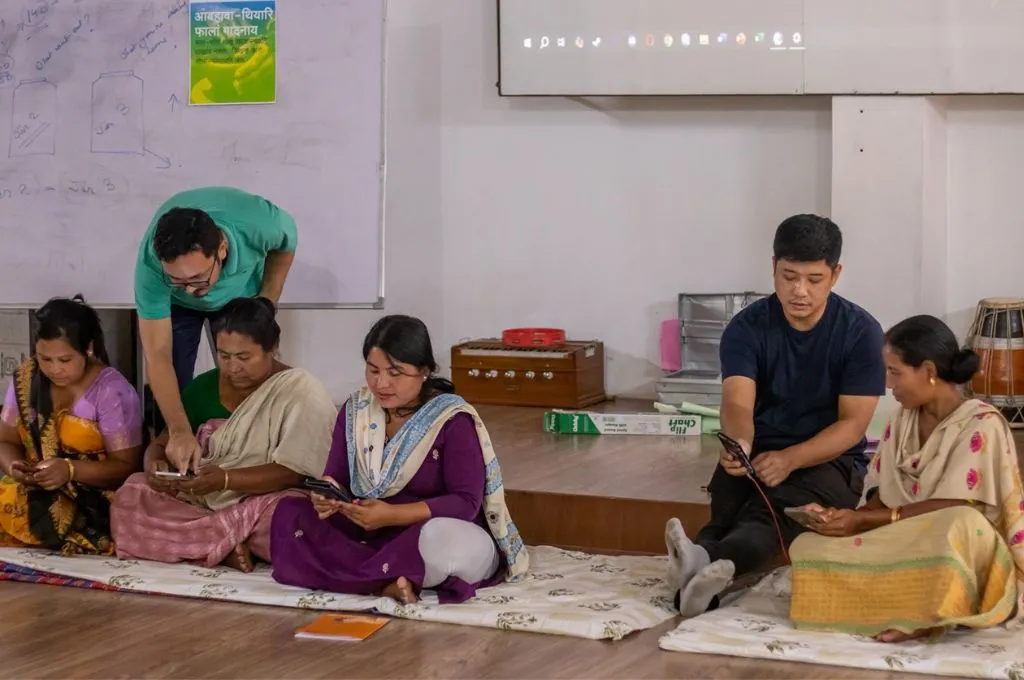
Many early steps in branding need more time and attention than money. In our training sessions, for instance, we teach entrepreneurs to photograph their own products with a smartphone and edit the images with free apps.
Branding as a promise
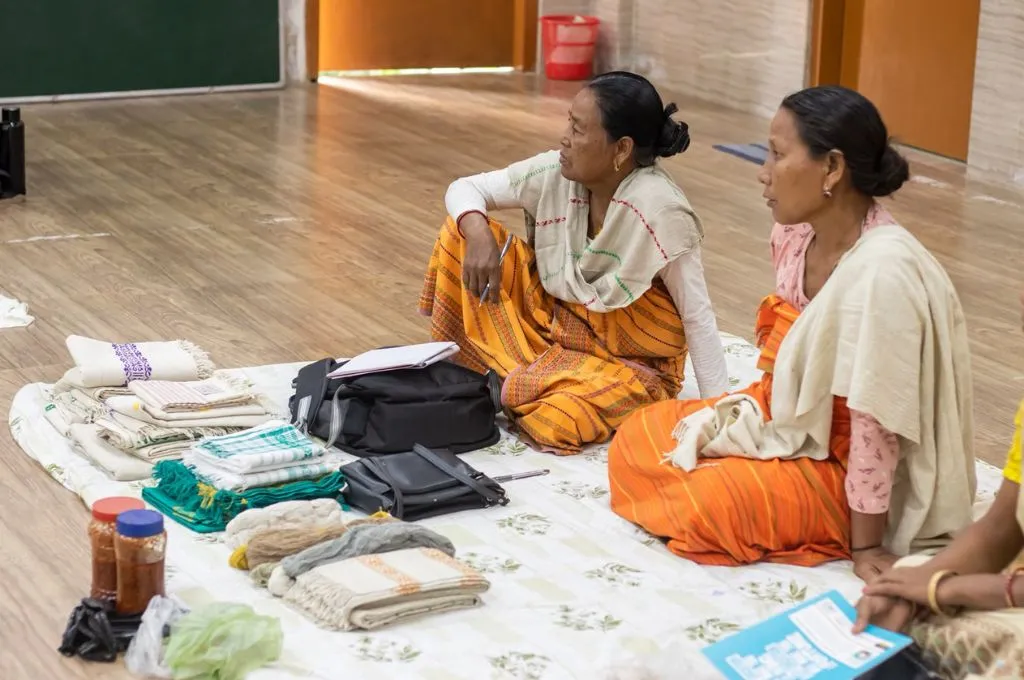
For small social enterprises that can’t afford professional support at the outset, a cohort-based approach offers a practical alternative. In a cohort, several enterprises learn together and build branding skills and confidence within their own teams. This can reduce their dependence on external experts for every branding decision. They also learn from one another, drawing on their peers’ experiences to strengthen their own ideas.
In the cohort we supported with Dhwani Foundation, the opening orientation gave teams a chance to review their existing branding materials with fresh eyes. They examined whether these materials conveyed the messages and identity they wanted people to associate with their enterprises.
For a social enterprise, branding is a promise that shapes its credibility and goes beyond creating an attractive public image. When a funder considers continuing its support or a community decides whether to join a programme, the enterprise’s identity, how it presents its work, and the messages it communicates can influence the decision.
—
Know more
- Read more about what goes into building a strong nonprofit brand.
- Read this article to learn how a nonprofit built a brand around traditional craft.