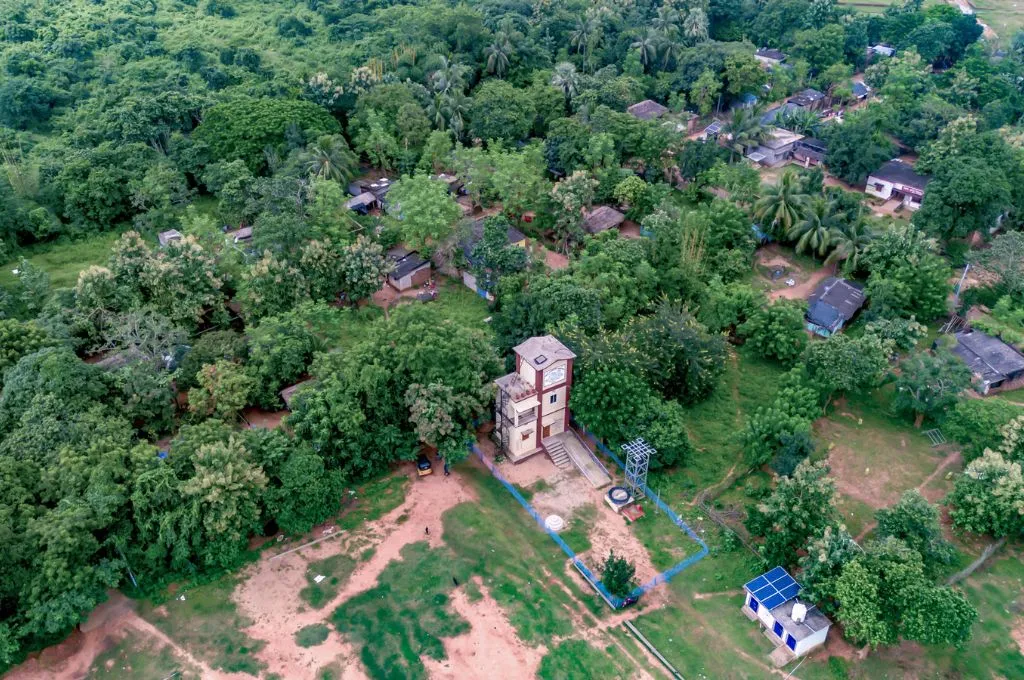
In 1997, the people of Dengapadar in Ganjam district of Odisha began building their piped water supply system. There were about 236 households in the village then. Not everyone was convinced that water could actually be piped to every home, and ten families initially chose not to participate. The approach required everyone to be part of the effort, so the village continued discussing the proposal and working through the differences until all households came on board.
Together they built a 78,000-litre overhead tank drawing water from two dug wells and laid a distribution system to take water to their homes. Each family also built a toilet and bathing room. The village created a corpus fund, with every household contributing INR 1,000. Since many families could not afford the full amount, the Gram Panchayat contributed INR 500 per household, and families contributed the rest. The money was placed in a fixed deposit. A village committee was also set up to plan and oversee the work and manage the system.
Nearly three decades later, Dengapadar still has a piped water service, but the system has evolved with the village’s needs and increased population. Two water tanks with capacities of 35,000 and 50,000 litres have been added, along with a generator to deal with disruptions in electricity supply. A separate pipeline to 20 standposts has also been laid for use when regular household supply is disrupted. They keep six motors on standby so that a motor failure does not stop the water supply. New households have also been connected to the piped water system as the village has grown.

The financial arrangements have evolved as well. The village committee initially collected different monthly amounts from poorer and better-off households towards electricity and maintenance, but today all households make an equal monthly contribution. The corpus created when the system was built, together with other village funds accumulated over the years, also gave the village a financial reserve. By 2023, the village had about INR 14 lakh in fixed deposits. When a change in the electricity tariff resulted in a substantial additional liability, the committee negotiated with the electricity department and drew on these reserves to settle the amount.
Dengapadar’s experience illustrates some of the key elements needed to sustain a decentralised drinking water system over time. At Gram Vikas, we have worked with rural communities in nearly 1,500 villages in Odisha to build and manage decentralised piped water supply systems for more than three decades. Drawing from these experiences, we identify five considerations that are particularly relevant to how we think about the operations and maintenance (O&M) of decentralised and distributed rural drinking-water systems today.
O&M starts before the system starts
O&M is often understood as a process that begins once construction is complete and a system is commissioned. Our experience suggests that many of the conditions that determine whether O&M will work are created much earlier. The village of Kanamana in Ganjam district is a good example.
Before work could begin, the people of Kanamana had to reach an agreement across a village with differences in language, caste and economic circumstances. This included ensuring that every household participated in building toilets and bathing rooms, contributed to the process, and agreed to collectively own and manage the piped water supply system. They also agreed that the village committee would have equitable representation of all caste groups and equal numbers of men and women.
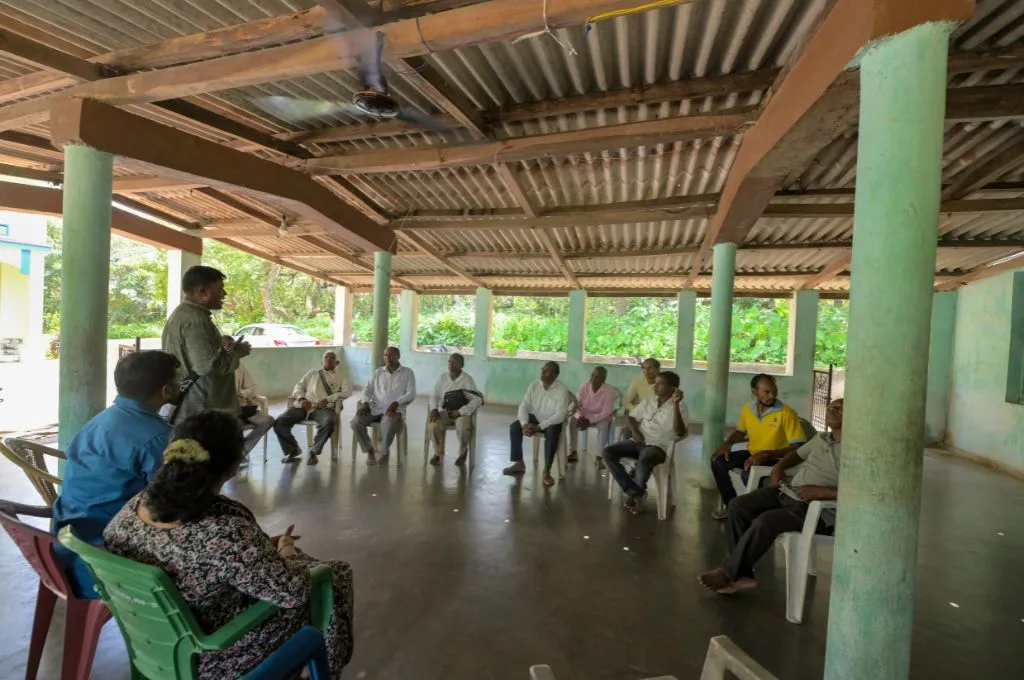
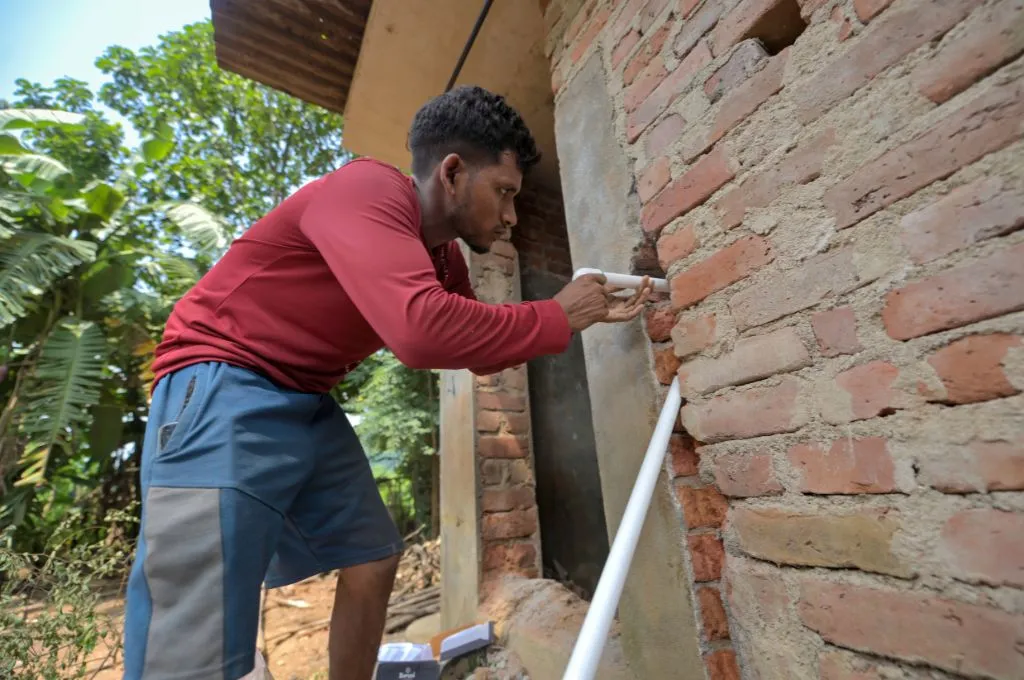
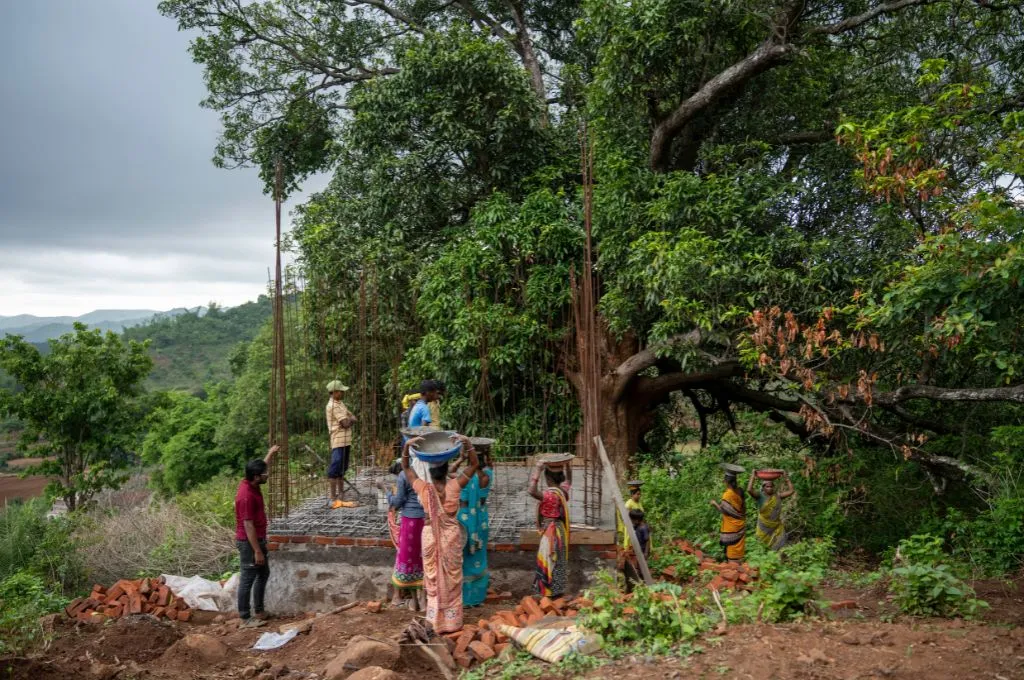
Once there was consensus, they formed a village committee to plan and oversee the work. Families contributed labour and locally available stone and sand towards constructing their toilets and bathing rooms. The village worked out arrangements that allowed families who found it difficult to make their contributions immediately to do so over time. The committee maintained records of these arrangements. Local people learnt skills during construction, including plumbing, and the village created a corpus fund with contributions from every household. When the villagers built their piped water system, they again contributed labour, while government funds and technical and material support from Gram Vikas complemented what the village was able to mobilise.

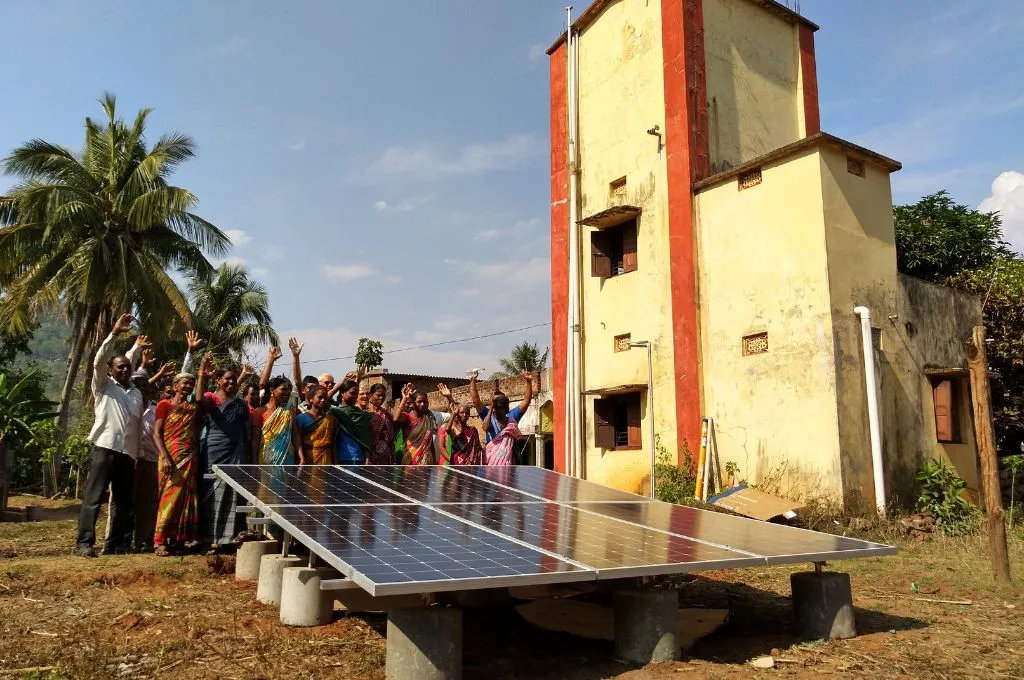
More than a decade later, increased demand and rising electricity costs led the village to add another borewell with a solar-powered pump. The same processes came into play again.
The capabilities needed to operate and maintain a system are therefore developed through the process of creating it. People learn to deliberate, resolve differences, mobilise resources, supervise work, maintain records and acquire technical skills well before they are called upon to manage the completed system.
The habitation is often the appropriate unit of management
As decentralised rural water systems are taken to scale, an important question is about the level at which their day-to-day management should sit. Our experience in Odisha suggests that the habitation, or a physical cluster of houses, is often the most appropriate primary unit, because this is frequently where the physical boundaries of the water system and the community of people using it come together.
Dumerjore Gram Panchayat in Sundargarh district consists of five revenue villages and 11 hamlets. Within the Dumerjore habitation itself, the villagers initially built a 65,000-litre water tank. Four borewells were dug with government support, of which two yielded water. Over time, it became clear that one part of the habitation was not receiving adequate water, and the villagers added another 20,000-litre tank and a borewell to improve supply to that area. Even with this, some households in one of the revenue villages continued to face problems because of differences in water pressure.
This is significant in a state such as Odisha, where a revenue village can consist of geographically dispersed habitations with different elevations, water sources, settlement patterns and distribution requirements. They may also have distinct social histories and arrangements for collective decision-making. Administrative geography and water-service geography do not necessarily coincide. At habitation level, the people managing the system are also the people who experience its performance every day. They know whether water reaches different parts of the settlement, where pressure is inadequate, whether a source is weakening, whether water quality is changing and whether agreed supply arrangements are working.
This does not mean that every function should sit at habitation level. The Gram Panchayat has an important role in aggregating requirements across habitations, mobilising resources from household contributions and government schemes, providing oversight and connecting local systems to technical and administrative support. Functions requiring greater technical capability, finance or statutory authority will necessarily sit at higher levels. As far as possible, everyday management should be organised around the physical water system and the community that uses it.
Financial sustainability requires clarity on who pays for what
From the beginning, villages had to make their own arrangements for meeting the costs of running and maintaining their water systems. Households contributed regularly towards electricity, payment of the operator and routine maintenance, with the village institution deciding the amount, collecting the contributions, maintaining bank accounts and managing the expenditure. A separate corpus fund, created through household contributions when the system was built, was intended to help ensure that new households could also become part of the system over time.
Tala Landusahi in Gajapati district shows how one village dealt with this over time. When the original households built their water and sanitation systems, they contributed money, materials and labour and built up the village’s corpus and maintenance funds. As new families subsequently formed, the village had to decide how they would enter a system whose assets and financial reserves had been created by earlier households. The villagers decided that a new household seeking a water connection contribute INR 10,000 to the corpus, as it would now be a participant in assets and funds that others had helped create over the years.
Other villages have worked out different arrangements. Some collect a fixed monthly amount from new households, some differentiate contributions, and some raise additional money when a major repair is required. There is no single tariff model; arrangements have evolved in response to local circumstances.
These experiences also raise a question that becomes more important as rural piped water systems grow larger and more technically complex: What can users reasonably be expected to pay for? A monthly contribution adequate for routine costs such as operator fees and minor repairs may never be sufficient for larger expenditures such as renewing an ageing distribution network.
The wider public financing framework recognises that O&M need not come from household payments alone. Rural water guidelines1,2,3,4 provide for O&M accounts to receive resources from user contributions as well as government incentive funds and Finance Commission grants, with Gram Panchayats and their water institutions responsible for determining and collecting user charges. The important question is how this becomes a workable financing arrangement on the ground.
There needs to be clarity about which costs should be covered by user charges, which should be financed by the Gram Panchayat, which should be supported through other public resources, and how major repairs, replacement, and augmentation are to be funded. The answer may vary from place to place, but without such clarity, local ownership can easily become a transfer of financial risk to communities.
Community management does not mean managing everything alone
The limits are not only financial. Kudupakia village in Kandhamal district provides a sobering example of what happens when a problem moves beyond the capacity of a village to resolve.
The people of Kudupakia built their piped water system in 2015. The village had an operator whose fees were contributed by the households, while people with locally available skills undertook routine repairs. Several villagers had also been trained as masons. These arrangements worked until electricity costs became a serious problem. Charges increased sharply, and bills did not arrive regularly. Arrears reached nearly INR 2 lakh, and eventually the electricity connection was disconnected, and the piped water system stopped functioning. Village representatives approached electricity officials at different levels but could not resolve the problem. For more than a year, the system remained out of operation, and families had to return to collecting water from other sources. The issue here was not an absence of local responsibility, but the absence of an effective mechanism for dealing with a problem that had moved beyond the village’s capacity to resolve.
Decentralised management therefore needs a support architecture that is as deliberately designed as the local institution itself. Problems like major mechanical failures, source problems, water-quality issues, large capital requirements or disputes with other utilities may require technical expertise, financial resources or administrative authority that sit elsewhere. Communities need to know what they are responsible for, but they also need a clear and dependable route for problems that cannot be resolved locally. Local responsibility and professional support are complementary parts of a decentralised water service, not alternatives to each other.
Sustainability means sustaining the service, not preserving the asset
Tarava village in Gajapati district offers another way of looking at sustainability. The people of Tarava built their piped water system more than two decades ago and have continued to modify it as needs and circumstances changed. The village now uses more than one water source, with both grid electricity and solar power for pumping, providing alternatives when there is a disruption in power or a problem with a source. Village leaders represented in the Panchayat bring available funds to partly or wholly support these arrangements. Over the years, motors and other electrical equipment have had to be repaired or replaced. Local people have also undertaken repairs to taps, household connections, and pipelines. Over the same period, village leadership and committee membership have changed, but the arrangements for managing the system have continued through these transitions.
The arrangements for operating the system have evolved alongside the infrastructure. Two villagers are selected each year to operate the water supply system, and households contribute rice towards their compensation. Water is supplied during fixed hours, partly to limit unnecessary use, especially in the summer months. This suggests a more useful way of thinking about sustainability. A system designed twenty years ago cannot reasonably be expected to remain unchanged. The test of sustainability is whether the people and institutions around it have the ability to maintain, repair, replace, augment and adapt the system so that an adequate, reliable and safe water service continues.
Seen this way, O&M is much more than a maintenance budget and someone who knows how to operate or repair a pump. It requires local institutions capable of taking decisions; predictable and appropriately shared financing; technical capability; attention to source sustainability and water quality; and mechanisms to resolve problems beyond the local level.
This brings us back to Dengapadar. The water system the people of Dengapadar manage today could not have remained exactly the one they built in 1997. The village has grown by almost 80 households; infrastructure has aged; costs have increased; new tanks have been added; backup arrangements have been created; motors have been repaired and replaced; and the village has had to negotiate with outside institutions and change what households contribute. The fact that the system has changed is not evidence that the original system was unsustainable. The ability to make those changes is part of what sustainability means.
For decentralised and distributed rural drinking-water systems, the challenge goes well beyond maintaining infrastructure. It requires building local responsibility from the beginning, managing the service at the appropriate local scale, sharing costs and risks clearly, ensuring access to technical and institutional support, and adapting as circumstances change.
Ultimately, the question is not simply who will maintain the water infrastructure, but what institutional, financial and technical arrangements will keep the water service running, year after year.
—
Footnotes:
- Jal Jeevan Mission Guidelines 2019.
- Jal Jeevan Mission 2 Guidelines 2026.
- Margdarshika (guidelines) for Gram Panchayat and Paani Samiti to provide safe drinking water in rural households.
- Manual for the utilisation of the 15th Finance Commission tied grant to rural local bodies.
—
Know more
- Learn more about how people in rural Odisha build and manage their own water and sanitation facilities.
- Read about how community ownership and management of piped water supply systems can be scaled.
- Learn about the gaps urban India’s water supply infrastructure and why prioritising repair is critical.