Ravish,* 34, works as a labourer at a fly ash brick factory in Kota’s RIICO Paryavaran Industrial Area. Originally from Madhya Pradesh, he is one of approximately 2,000 workers (20–25 percent of them women) in this 76-unit industrial cluster. “We eat gud (jaggery) every day,” he says. “It helps clear the dust from our chests.”
The ‘dust’ is fly ash—a fine residue that is produced when coal burns in thermal power plants. It contains silica, alumina, iron oxides, and heavy metals such as arsenic, lead, cadmium, chromium, mercury, and copper. Fly ash mostly consists of ultrafine particles (smaller than PM2.5 and PM1). These particles penetrate the lungs and bloodstream, causing respiratory diseases such as asthma, tuberculosis, metal toxicity, and reduced lung function.
Whether the jaggery offers any real protection against these ultrafine particles is uncertain, but workers across all units rely on it.

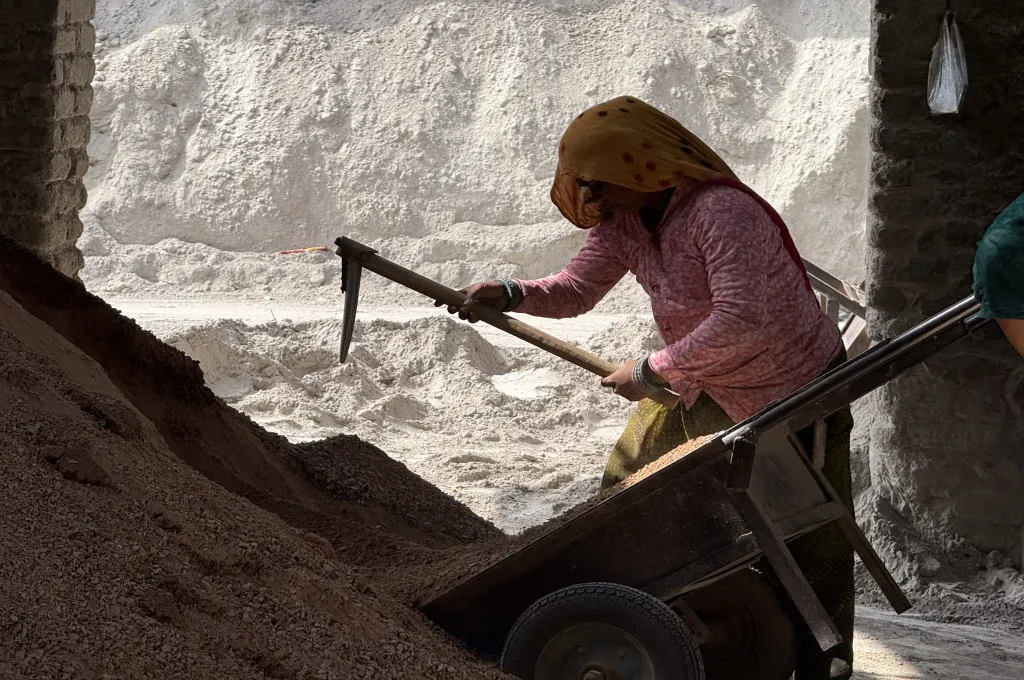
Ravish and his fellow workers repeatedly move through these clouds of dust at every stage of making fly ash bricks, be it shovelling, mixing, operating machines, moulding bricks, drying them, or loading finished bricks.
India’s coal power stations generate more than 340 million tonnes of fly ash annually. On December 31, 2021, the Union Ministry of Environment, Forest and Climate Change issued the Ash Utilisation Notification 2021. It mandates 100 percent utilisation of fly ash by every coal or lignite-based thermal power plant.
The notification restricts the excavation of topsoil for the manufacturing of bricks, and promotes the utilisation of fly ash in the manufacturing of building materials and in construction activity within a specified radius of 300 kilometres from thermal power plants.
The move is considered an environmental success, but it redistributes the risk rather than removing it. Instead of accumulating in ash ponds, fly ash is moved through open trucks, open yards, and open mixers, and finally settles in the lungs of workers and their families.
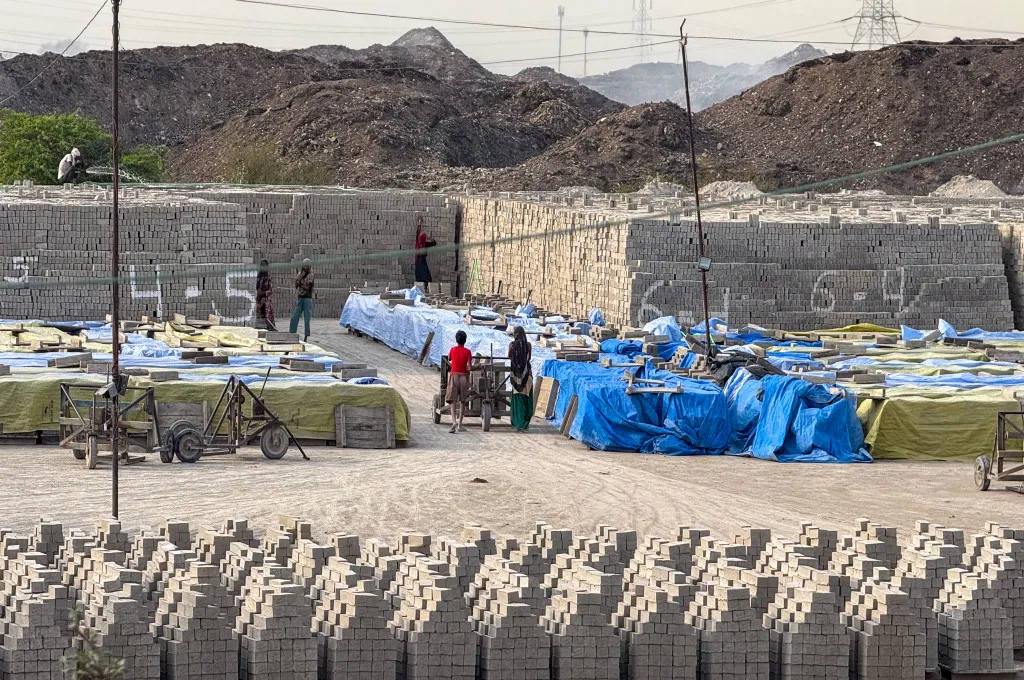
Established in 1999 across 45 hectares leased from the forest department, the RIICO cluster houses 76 units (author obtained data through RTI), all drawing ash from the Kota Super Thermal Power Station (KSTPS), which generates roughly two million tonnes of ash each year. The cluster is designed to mitigate fly ash pollution by utilising waste material, yet it lacks basic environmental controls such as dust suppression systems or pollution monitoring systems.

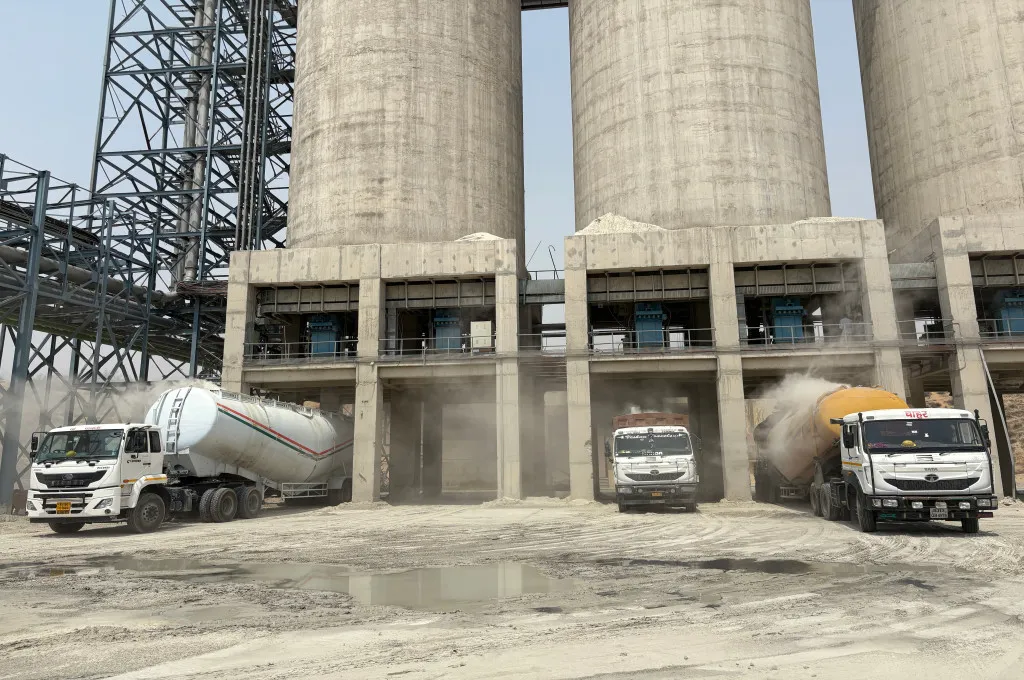
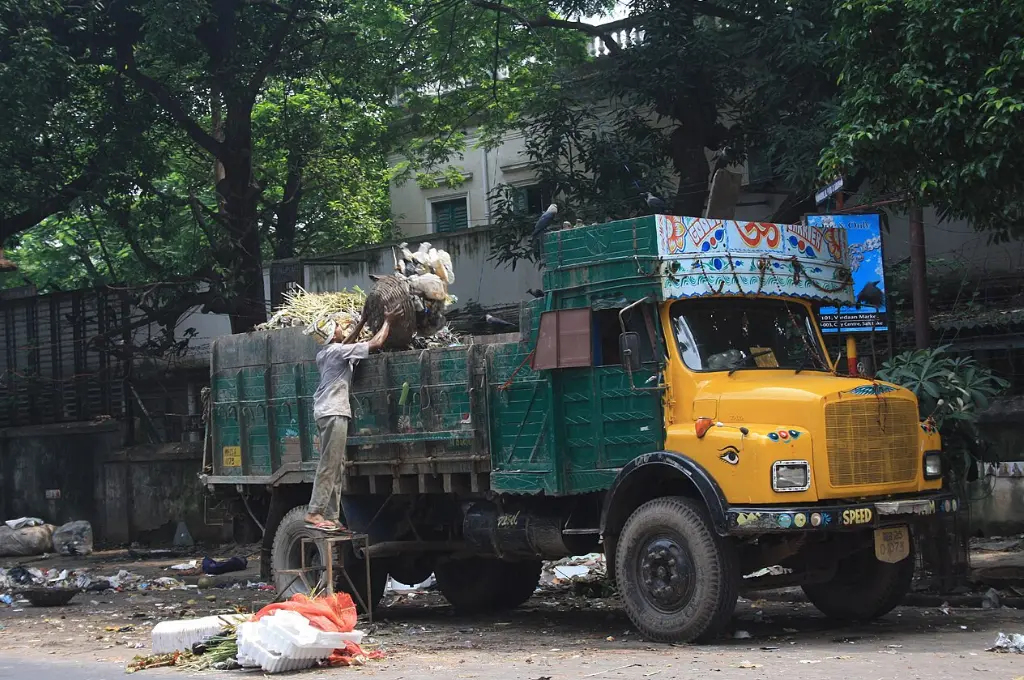
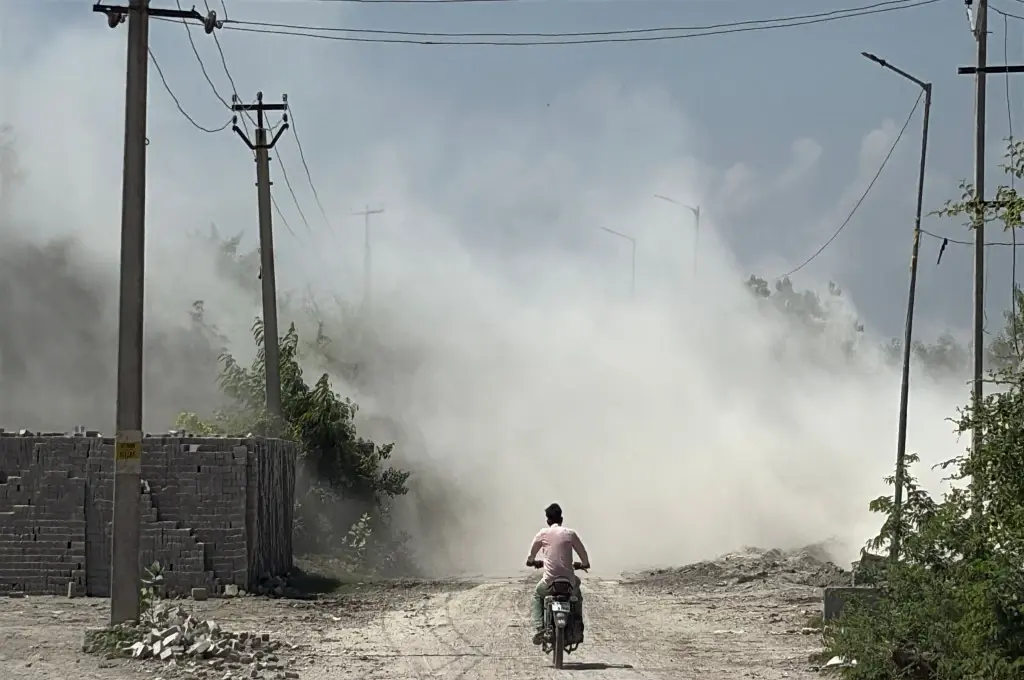
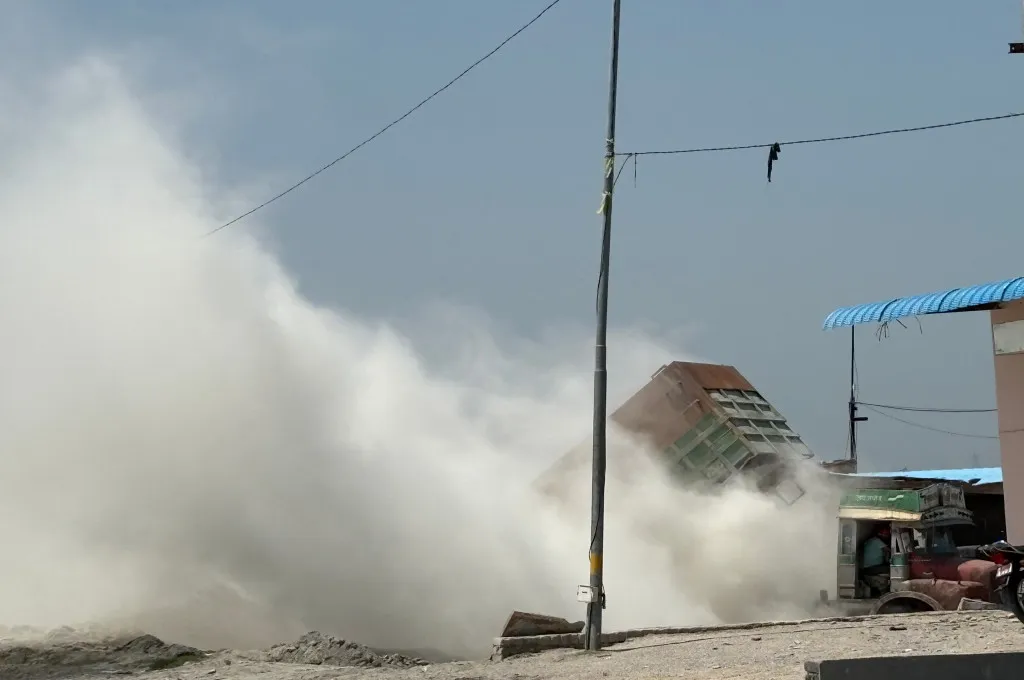
The ash arrives from KSTPS silos in open trucks to the fly ash units. Each unit receives one truck every two days. During the kilometre-long journey from the plant to the cluster, ash escapes continuously, settling on roadside shops and on those who work along this route. Inside the cluster, ash is dumped in open yards.
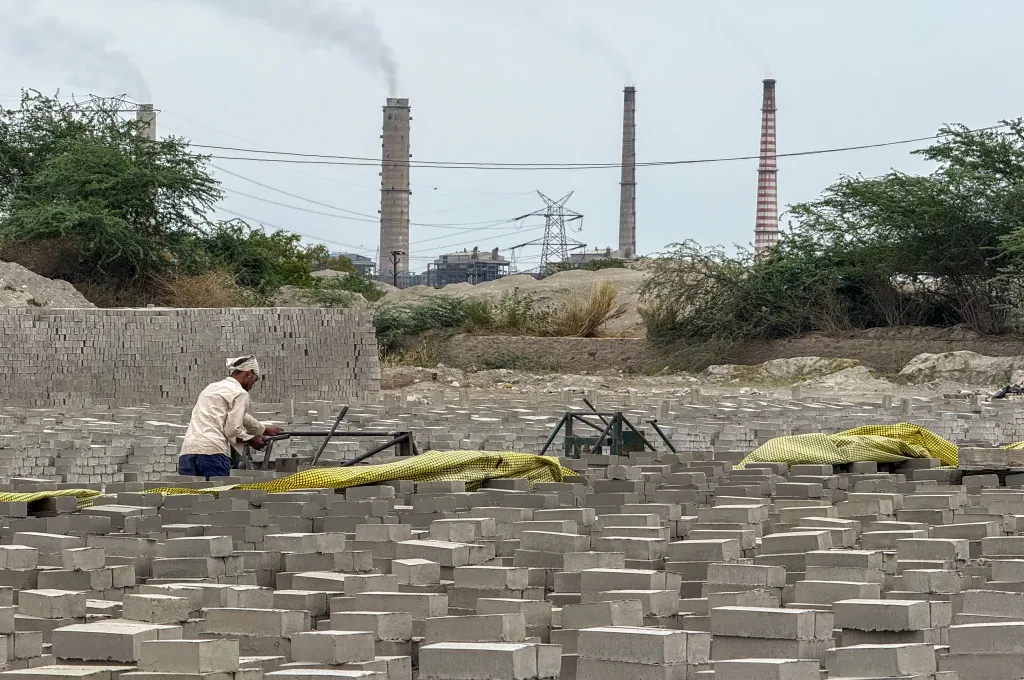
“Most of the workers migrate from Ashok Nagar in Madhya Pradesh and from parts of Bihar,” says Jagdish Saini,* a supervisor at one of the fly ash factories. The units produce bricks, which get marketed as ‘eco-friendly construction material’. For workers, this label contradicts everything around them.
Pavan,* a worker in the cluster, says the industry’s ‘green’ claim is meaningless. His days begin and end in air dense enough to sting the eyes and coat the throat.
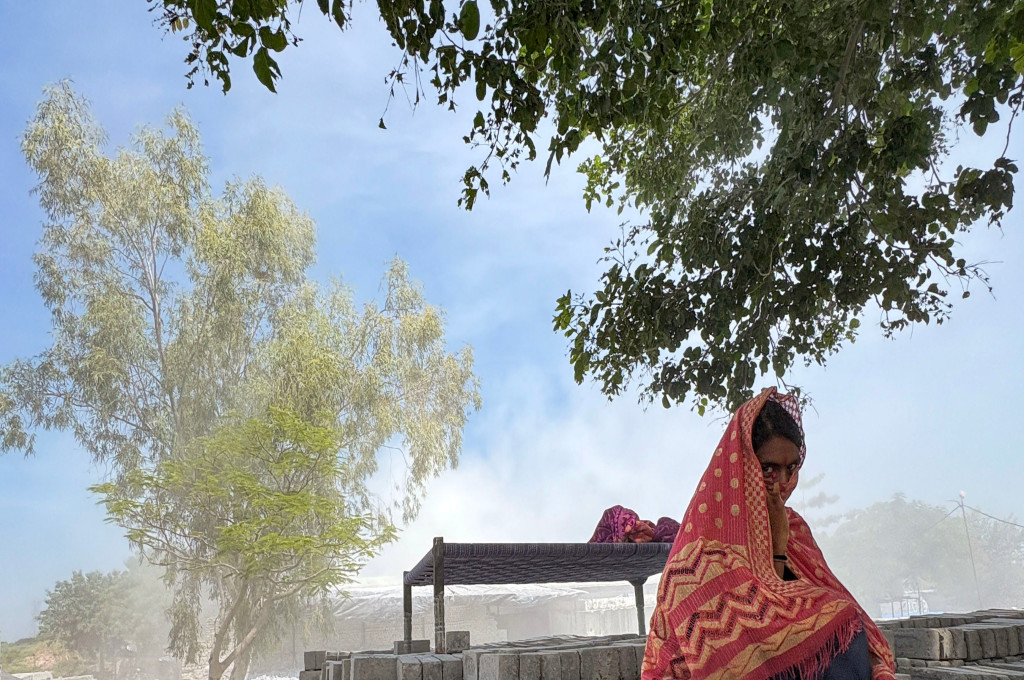
Workers face exposure at every stage of production. Loading ash from plant silos into open trucks creates bursts of high concentrations of ultrafine particles. Unloading inside the factory generates plumes that engulf entire lanes, reducing visibility. Dry mixing and transfer within units keep airborne levels high throughout the day. Every footstep and every moving brick resuspends settled ash during the drying and loading process. The exposure extends beyond work shifts, saturating the entire area.
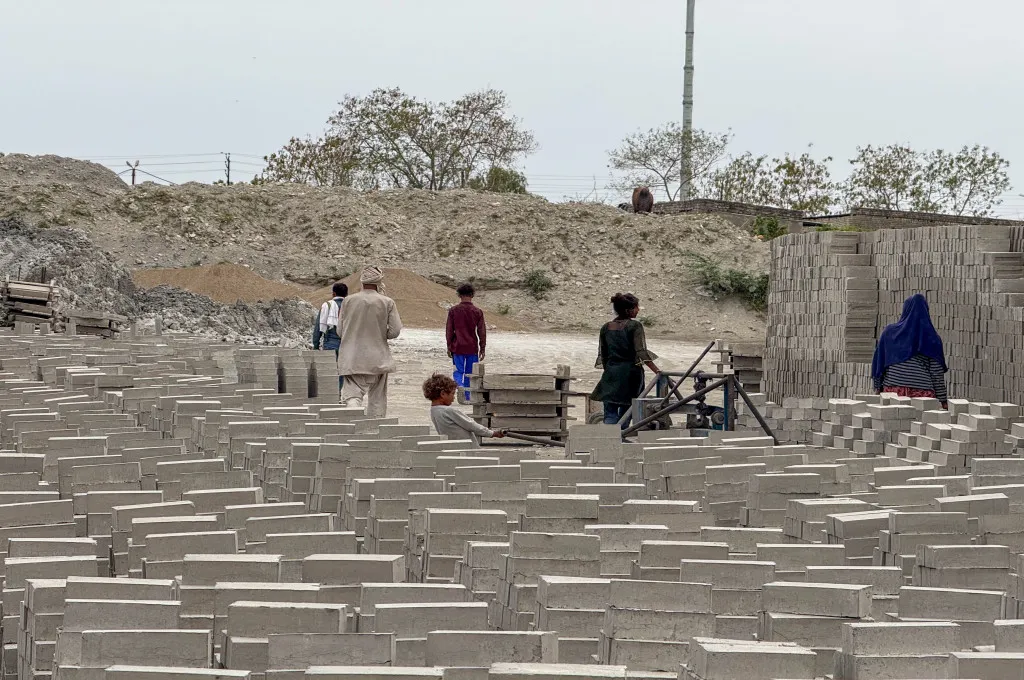
Production relies on two key machines: a mixer to combine fly ash with lime and sand, and a hydraulic press to mould bricks. Workers operate these machines for hours without dust masks, gloves, or protective gear, and expose themselves to toxic and unsafe places at close range. No protective systems exist beyond a cloth mask. Workers report that injuries from unguarded machine operation occur regularly.
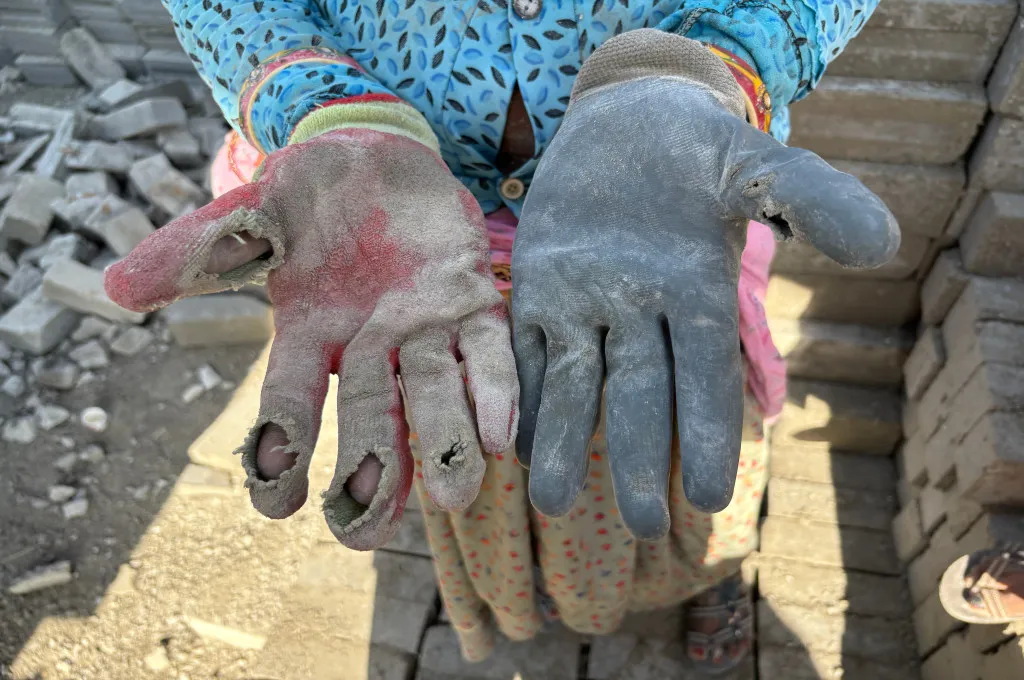
“We often get injured while operating the machine,” says Bhura,* another worker, while pointing to the worker beside him whose right hand is missing a finger. “Even when a worker is injured on the job, they are only given unpaid leave. While the owner covers medical expenses, the workers do not receive any wages for the days they miss while recovering.”
Each unit employs 16–20 workers through informal contractor networks. There are no written contracts, social security, or occupational safety provisions. A production team of nine workers produces approximately 15,000 bricks each day in peak season, earning INR 500 per worker. Loaders earn INR 250 per truck or tractor. Earnings drop sharply during rains or when the electricity supply falters. Most workers remain in this industry because it provides regular employment throughout the year, though production slows during the monsoon season.
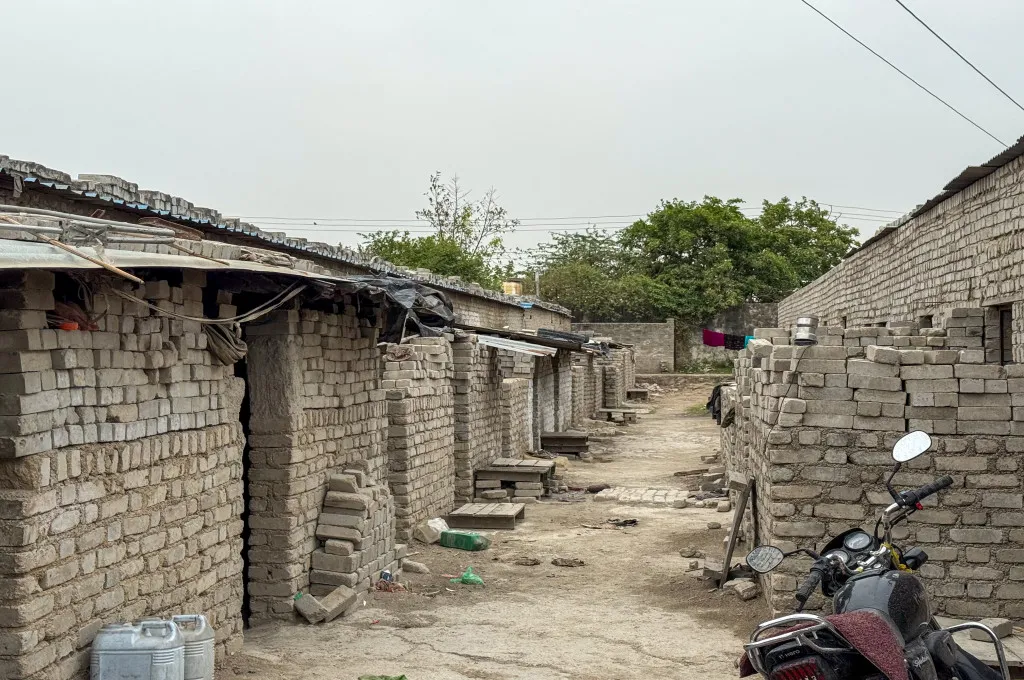
Workers often live with their families in makeshift rooms inside the factory compounds. Dust settles on bedding, utensils, food, and children’s play areas. Rooms have no ventilation. Sanitation consists of using the nearby open fields, and water is sourced from the tank available at the factory. Children live on-site and often help sort or stack bricks, inhaling the hazardous ash in the process.
The cluster sits next to a large municipal waste dump, adding another layer of dust, odour, and smoke to the air. No air-quality monitoring exists in the area, and workers receive no mandated health check-ups.
The Central Pollution Control Board (CPCB) classifies fly ash brick factories as ‘white industry’—a designation meant for activities with negligible environmental impact. This exempts them from routine inspections and environmental clearances, and reduces or removes consent requirements under the State Pollution Control Board (SPCB), the state-level monitoring agency.
KSTPS treats ash as a disposal issue, not as a labour concern. Responsibility ends at the plant gate. Brick manufacturers view ash as raw material. Neither of them monitor exposure or provide safety infrastructure. SPCB and the labour department rarely visit the cluster and do little to alleviate occupational risks. Without enforced safety standards, health monitoring, or institutional accountability, the hazardous dust harms workers.
The rationale rests on a circular assumption that because fly ash bricks are counted as ‘waste utilisation’, the activity is clean. This presumption removes oversight. Without oversight, unsafe practices continue. The criteria by which CPCB arrived at this designation needs to be re-examined.
*Names changed to maintain confidentiality.
—
Know more
- Read about who really gets heard in environmental public hearings.
- Learn why fly ash brick manufacturers are in a tough spot.