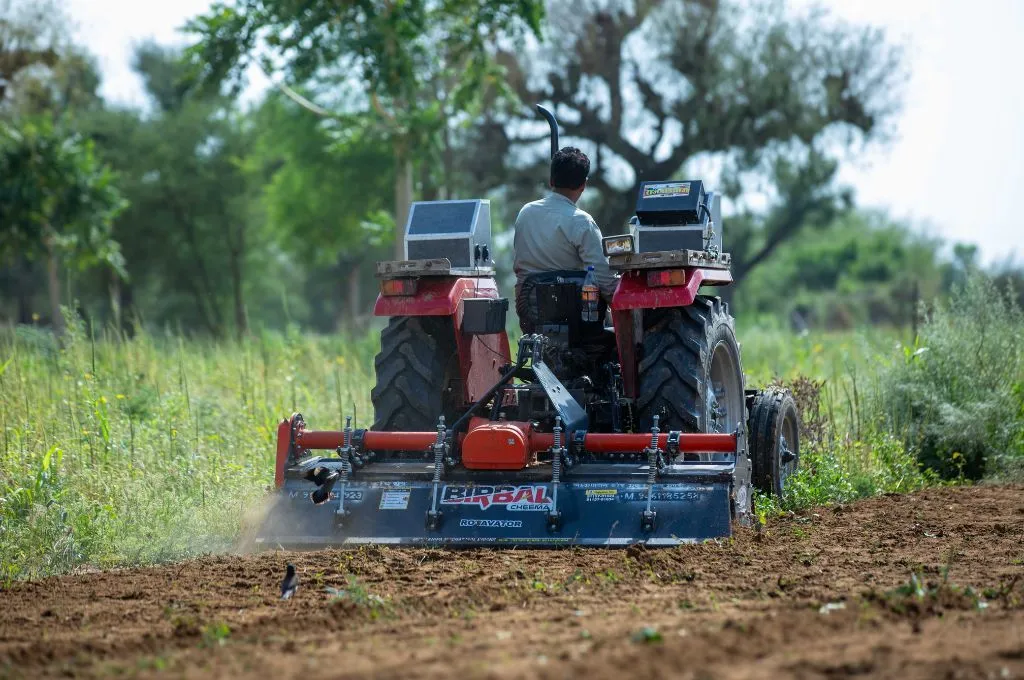
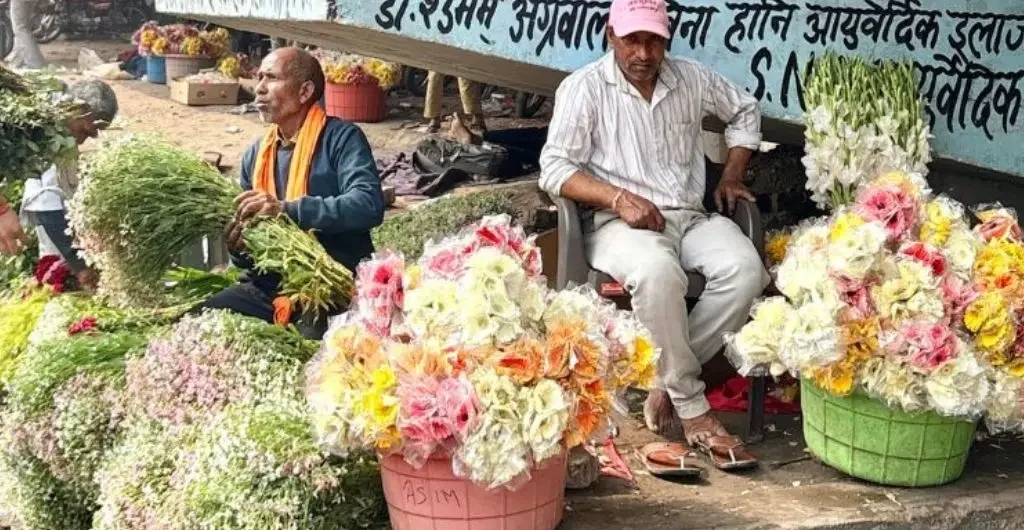
On a morning in June 2026, the open ground outside the Chirayu Women Crop Producer Company in Bhoura, Madhya Pradesh, was filled with tractors and pickups. Farmers had come to this village in the Betul district all the way from Harda and Pandhurna, more than 100 kilometres away.
Why? Because Chirayu was one of the few locations near these districts that still had stocks of urea and Diammonium Phosphate (DAP)—fertilisers necessary for the upcoming cropping season.
In April 2026, the state government launched the e-Vikas Portal to digitise the distribution of subsidised agricultural inputs, in an attempt to curb diversion and black marketing. A farmer’s eligibility would be verified against their land records and Aadhaar card. An OTP would be sent to their mobile number, which would be used to generate an e-token. The final transaction using this token would be confirmed using biometric Point of Sale (PoS) authentication. The system rested on a fundamental assumption that the identification layer, namely the land record, was accurate, and in the name of the farmer cultivating the land.

For farmers, this portal arrived with little warning or information. Meanwhile, Chirayu, which had only stocked 120 tonnes of DAP and urea for its 1,000 women shareholders, suddenly found itself designated as a fulfilment point for e-tokens issued to farmers across the region.
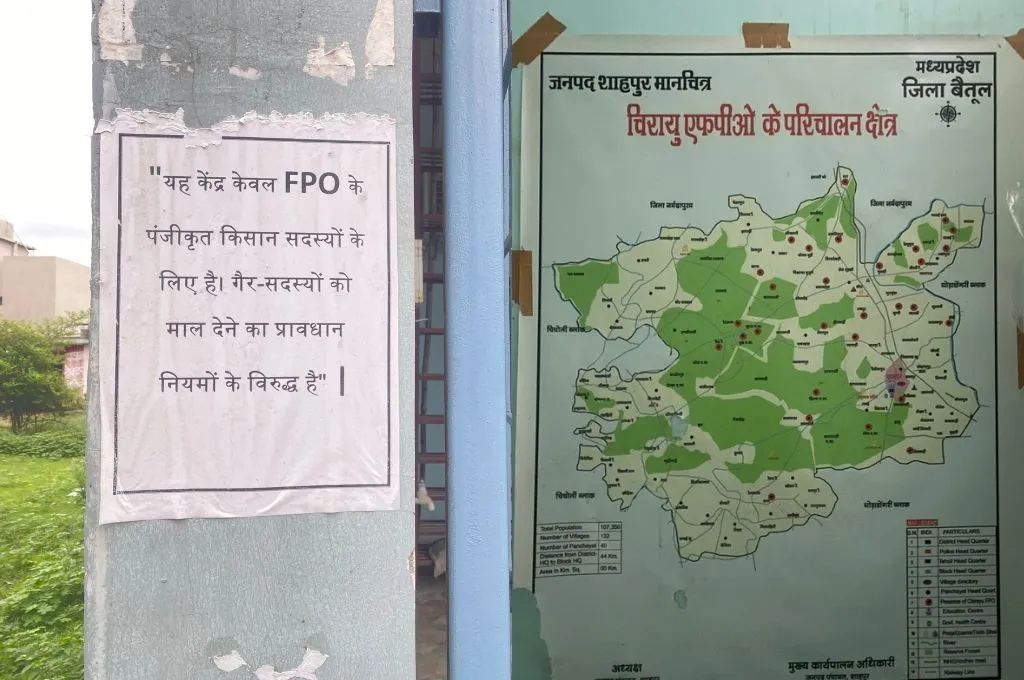
“Our priority is the members and shareholders who have been associated with us for years. We were listed as a retailer instead of a member-restricted FPC, which falls under a different government category, on the registration portal,” shared Chirayu’s CEO, Kamlesh Kotecha. Starting at 7 am on that June day, Kamlesh received around 50 calls from agitated farmers who had never heard of the company, or even Bhoura. Ultimately, 45 percent of Chirayu’s stock was sold to non-members who had driven hours and hundreds of kilometres for just a few bags of fertiliser.
By the end of June, as the kharif sowing window began, farmers in Betul were still scrambling to secure inputs, which delayed planting by weeks. As the disruption continued well into July, farmers organised major protests in Bhopal—ultimately leading the government to fully roll back the e-token system.
However, the impact outlasted the portal.
As digital processes are rolled out across the country for welfare delivery and government schemes, the experience of Betul’s farmers reveals the technological failures and social and economic fallout of such systems for the very people they are intended to serve. Over the course of June and July 2026, I visited women farmers in Bhoura, watching them make multiple trips to the Chirayu office to purchase fertilisers.

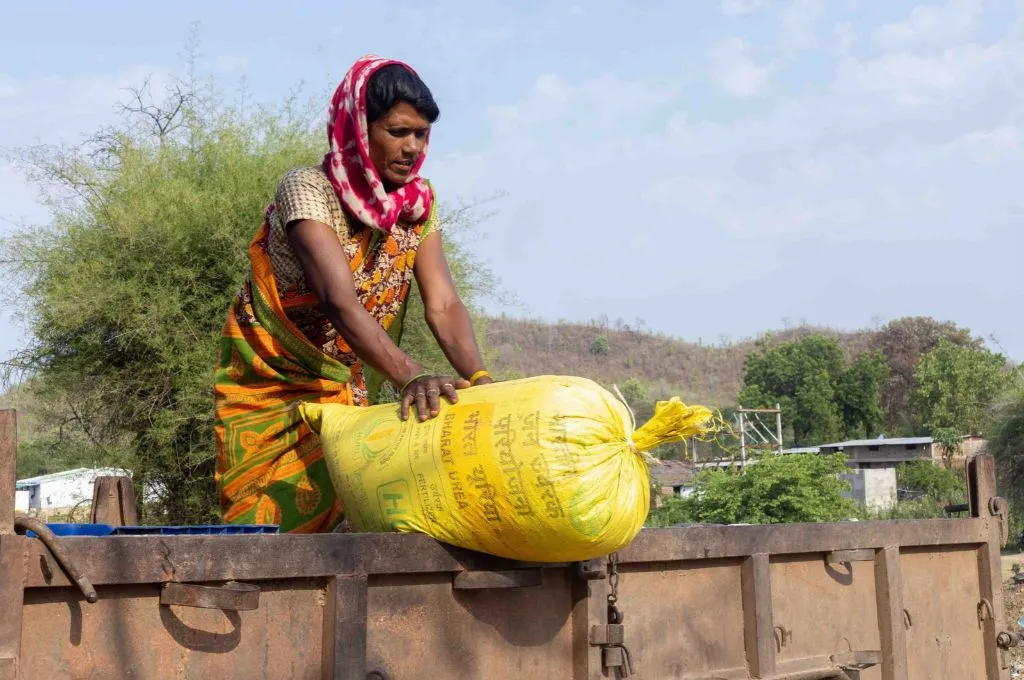
Rigid digital systems, rural realities, and bureaucratic chaos
“Where documentation is clear and the farmer is already empowered, the e-token system works smoothly without major hiccups. But when you step into Betul, you find a completely different reality. Here, farmers work on ancestral land. Land partition hasn’t happened for generations. If your name isn’t on the land, you are blocked not just from e-tokens, but from low-interest Kisan Credit Card loans and every other government scheme. You can’t fix a digital server issue when the basic land record foundation doesn’t exist,” says Deendayal Dangi, an agricultural expert working in the region.
Chirayu alerted members about the e-token system in the weeks before they were set to purchase the fertilisers, but this was not enough time for farmers to rectify or verify their land records to be able to successfully navigate the portal.
At Chirayu’s office, Rupesh, one of the employees, helped farmers access the e-Vikas portal. They would hand him a slip of paper with a phone number written on it, linked to their Aadhaar card, where the one-time password (OTP) would arrive. For older farmers, that number often belonged to a family member living elsewhere. Rupesh would wait for the OTP, sometimes calling to get it himself, while the portal occasionally threw up server errors. Once authenticated, the system fetched land records and calculated a fertiliser allocation proportional to landholding. It then generated an e-token, tied to one or multiple vendors, and valid for roughly 72 hours. The token was non-transferable until it lapsed, even if that allocated vendor’s stock ran out before the farmer arrived. Because stock visibility was shared across the portal in real time, a competitive rush followed the moment any vendor showed availability.
In several cases where a farmer did not receive their full allocation from a single vendor, the portal sent them to a second location for the remainder. This meant an another trip and additional expenses up to INR 3,000.
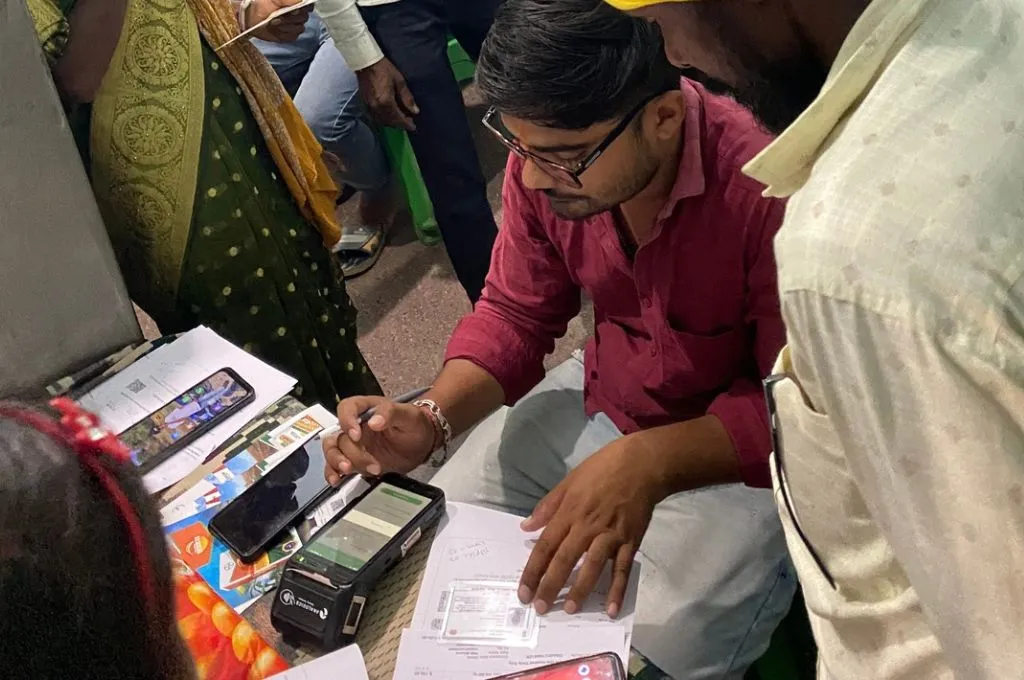
Nirmala, a Chirayu board member from Gurgunda village, recalls, “When we went to get a token under my father’s name (who is the landholder), the pickup location was assigned near Betul, (about 50 kilometres away) so we could not get DAP and urea because transport costs were high. We brought urea from Pahawadi (10–12 km away) on our fourth attempt after booking tokens repeatedly. We had to apply DAP after we missed the sowing window, which was delayed by 10–15 days for both maize and paddy across our village.”
In addition to these challenges came the usual roadblocks associated with digitisation in India’s rural and remote areas. Decades of hard agricultural labour had worn down the ridges on farmers’ fingers, so many could not complete biometric authentication at the PoS counters. Poor mobile network coverage in interior areas made real-time OTP verification highly unreliable, causing 72-hour tokens to expire before messages were received. In other cases, minor spelling variations between bank accounts, Aadhaar cards, and land records triggered automatic exclusions from the portal.
The land record faultline that hit women hardest
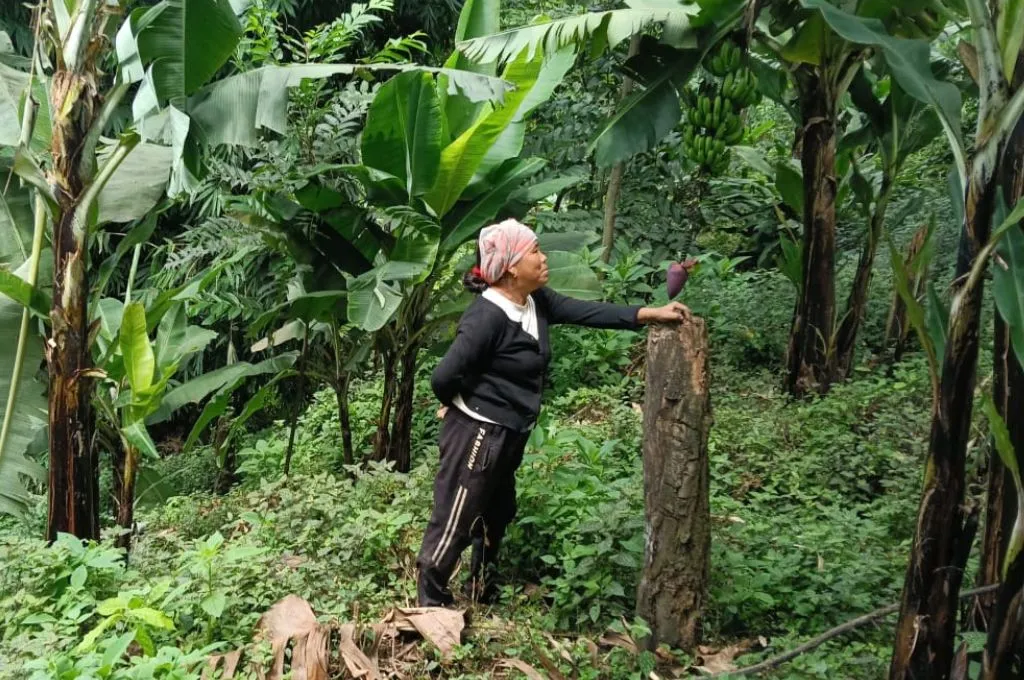
The assumption that the person who farms the land owns the title is heavily gendered and fails for a substantial portion of cultivators, including women from tribal communities. Many women cultivate on family property under informal arrangements without documentation. When the government system demands a land record at the counter, that informal goodwill runs out.
As such, women without land titles could get e-tokens only if a family member, most likely a male relative, provided their records for the application. In cases of family disputes, or when family members were unwilling to hand over land records, women could not get e-tokens.
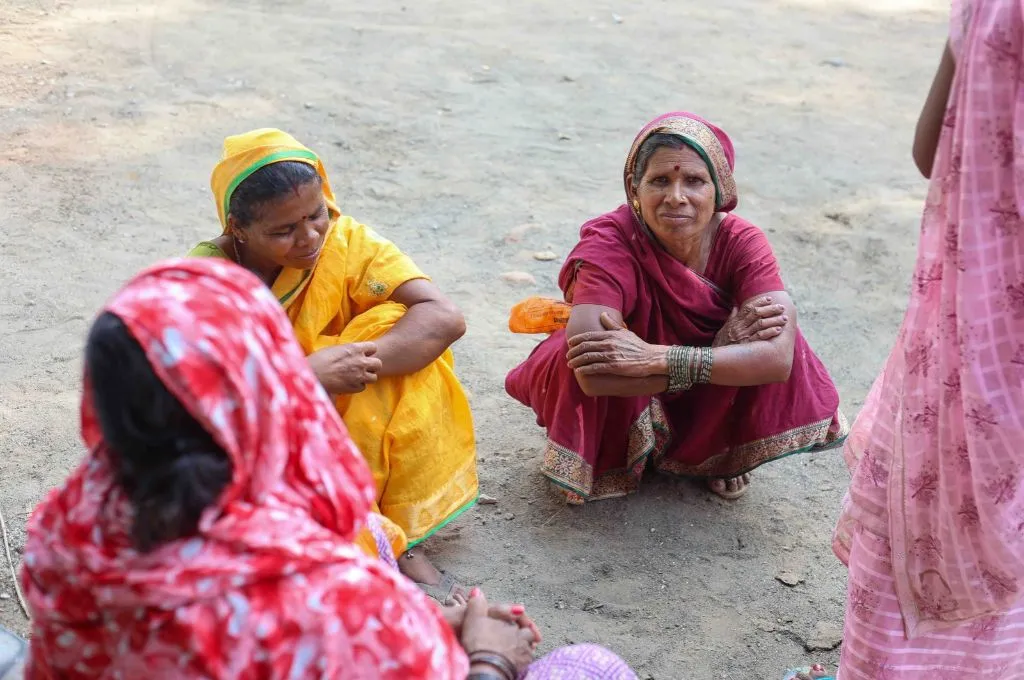
For Sangeeta Bai, a farmer from Malwar village, the process of transferring the family’s land to her husband’s name stalled after her father-in-law died. Inheritance and title transfer are notoriously difficult and expensive, and the process is often hostile to women who must navigate complex legal paperwork or pay bribes to officials. In cases where the title is still registered to a deceased person, families are also wary of producing documentation in any official context. Updating the record after dividing the land, linking it to Aadhaar, getting a notarised signature, uploading documents to the portal, and getting approval from the Tehsildar/sub-district magistrate (SDM) can take weeks.
“I noticed that other villagers who didn’t own land were borrowing the documents of farmers with larger acreages just to get their allocations,” Sangeeta says. “One of my relatives lent me her paperwork. I managed to secure the supplies, which I then divided between myself and another woman who was facing the exact same issue.”
Farmers cultivating on leased land, or sikhmi batai, which is often based on a written or verbal agreement, are also eligible in theory but remain dependent on the landlord’s goodwill.
Forest villages faced compounded challenges
A substantial share of Betul’s cultivating population resides in forest villages. To access the e-token system, farmers first required a patta.
Forest land operates under a parallel administrative and legal regime which grants individual and community titles through a process that is entirely separate from the revenue land record system. Many claims are still pending—caught between forest department objections, survey disputes, and administrative backlogs. The patwari had to upload each farmer’s Khasra (land record details) and Rakba (land measurement) onto the portal. If workload, technical problems or limited digital access got in the way, the record simply did not appear in the portal. A manual entry error by the patwari in the system could also lead to an incorrect proportional fertiliser allocation for the farmer.
Meanwhile, in some cases, the portal introduced an automated land division, which meant that holdings were suddenly divided equally among all siblings, without accounting for who was actually cultivating the land. Farmers’ fertiliser allotments were now determined on the basis of land parcels that did not exist on the ground. Jagdish, a farmer, explained:
The entire approval process could take anywhere from one to a few weeks and mean additional costs including registration fees and other expenses. Ultimately, many farmers missed the sowing window as a result.
A frozen market and livelihoods in limbo
Following protests at the end of July, Agriculture Secretary Nishant Warwade directed retailers to adopt a hybrid system, allowing fertiliser sales through both e-Vikas tokens and direct PoS biometric entry, before the government formally revoked the e-token system on July 30. The hybrid mode has been operational since then.
However, rather than providing relief, the sudden rollback created a new trap, shifting the pressure directly onto FPCs and local vendors. First, the government issued a strict notice declaring that any Producer Company preventing non-member farmers from purchasing inputs from its stock would face immediate licence cancellation. At the same time, the transition to hybrid mode threw vendors into operational chaos due to a lack of clear guidelines.
For farmers buying fertiliser at the PoS counter using just an Aadhaar card, there was no verification mechanism in place to check whether the land was registered in their name. Moreover, the government order failed to specify the quantity and type of fertiliser that should be allocated per farmer through the PoS machines.
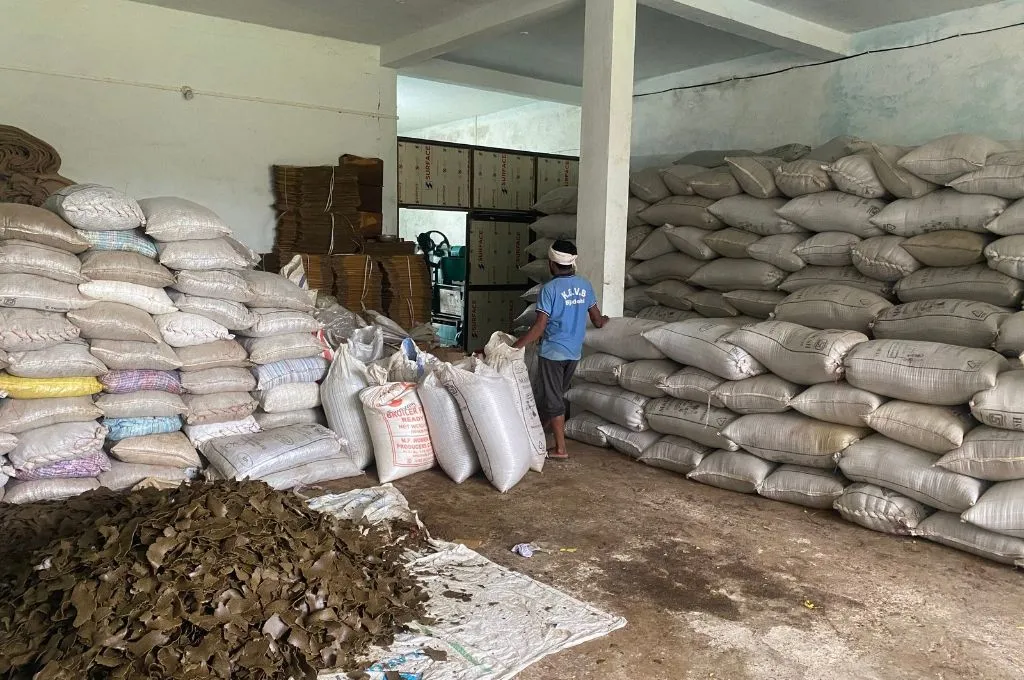
As a result, without clear allocation, farmers demanded as much fertiliser as they could get. Merchants, meanwhile, still had to upload every PoS transaction back onto the e-Vikas portal, where backend software still evaluated sales against land records. Terrified of inventory mismatches and licence cancellations, merchants stopped selling fertiliser altogether, keeping stock locked up for days, leaving farmers waiting. In WhatsApp trade groups across districts like Ujjain and Betul, local agriculture officers simply posted phone numbers of senior officials and deflected responsibility.
The e-Vikas portal’s trajectory reveals a paradox in digital governance. Introduced by the state as a high-tech tool to fix price gouging and leakages, its real-life implementation ended up driving farmers to purchase inputs at inflated rates from the black market. Farmers paid INR 1,000–1,200 for a bag of urea against its subsidised price of INR 266, and INR 2,400–2,500 for DAP, against a subsidised price of INR 1,350 per 50 kilograms.
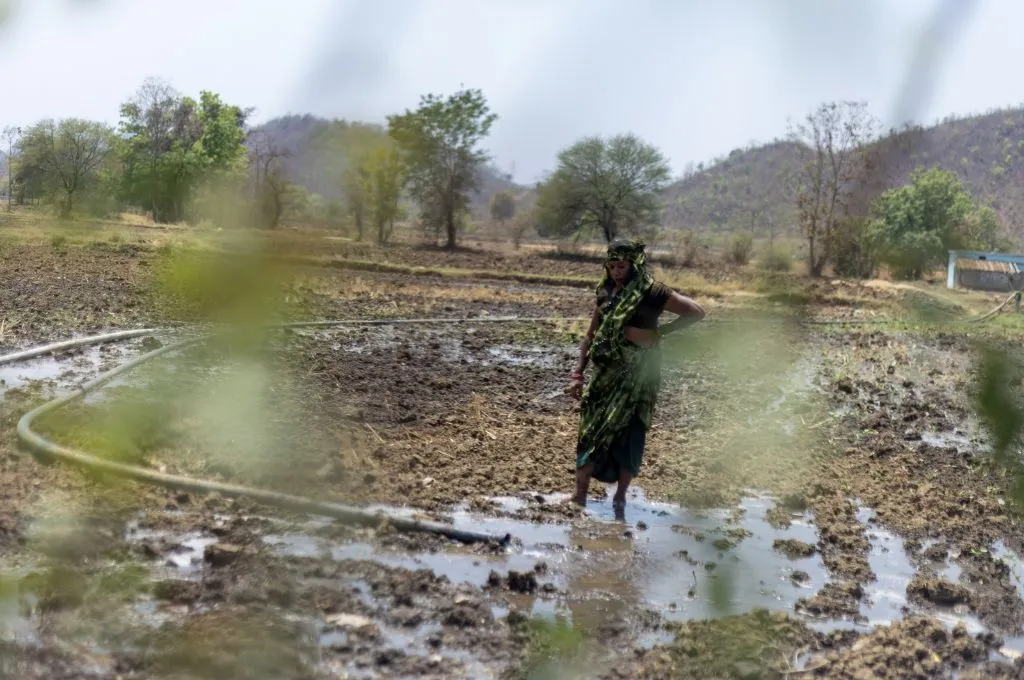
Meanwhile, some farmers have had to suddenly switch cultivating practices. In Tekripura, Anita, who sources seeds and fertilisers for Chirayu, was unable to register on the e-Vikas portal to get fertiliser to plant maize. Instead of letting the land sit idle, she began cultivating paddy using the System of Rice Intensification (SRI) to bypass the subsidy system entirely. Farmers in the belt have also resorted to sowing hybrid crops without using fertilisers, choosing to accept lower productivity to grow just enough for household consumption.
Technology alone cannot fix governance failures
These experiences emphasise that technological ‘solutions’ cannot exist in a vacuum. A marginal farmer who didn’t own a smartphone or know which portal opened at what hour suddenly had to fight for e-token slots at 4 am.
When technology failed to address the underlying structural realities on the ground, the state did not resolve them. Instead, it rolled the system back quietly, similar to what happened in Andhra Pradesh, where a near-identical Aadhaar-linked PoS system was piloted in 2016. Two of its three data pillars, land records and soil health cards, failed to function on the ground; biometric rejection rates ran between 10 and 20 percent; and retailers bypassed the system during peak season, accepting any available Aadhaar number to give away fertilisers.
A decade later, Madhya Pradesh farmers experienced the same failure. The state, meanwhile, pushed the responsibility onto local vendors, who had to navigate an ambiguous hybrid system under threat of licence cancellation. At Chirayu, the aftermath is visible. They did not restock urea beyond what was needed to serve their shareholders through the first crop dressing.
This incident also illustrates how the power of local governance institutions has been systematically undermined in favour of distant portals. According to Jagish, previously, the patwari would come to the Gram Sabha directly and conduct land demarcation and partition. Now, patwaris tell people to go to the Lok Seva Kendra, file an application, hire a lawyer, and wait for the Tehsildar to review their application. These lengthy and expensive processes effectively exclude farmers from claiming their rights and entitlements.
If the revenue department had partnered with block- and district-level officials and Gram Sabhas to clear the massive backlog of family land transfers, or conducted village-level awareness drives, the farmers would not have been driven to desperation. Unless government systems address existing challenges in land access, each new layer of technology will continue to exacerbate problems for vulnerable and marginalised farmers—suffocating their livelihoods in the process.
—
Know more
- Read more about how farmers are using social media to talk about disruptions in access to fertiliser subsidies.
- Understand how India’s digital welfare systems are excluding people from basic rights to food, education, and livelihoods.
- Learn about the challenges faced by farmer producer companies in raising working capital to sustainably expand operations.