On August 5, 2019, Kritika*, a counsellor at Shakti Shalini, was withdrawing cash from an ATM near our office in Jangpura, New Delhi, when she was attacked by a group of eight people attempting to abduct her. The attack was led by the former partner of a survivor of sexual and gender-based violence living at Shakti Shalini’s shelter home. Kritika was handling the case, protecting the survivor’s well-being and identity. Despite the presence of several bystanders, she did not get any help when she was attacked. Kritika eventually managed to escape, but her case is not an exception.
While there is limited data on the safety of frontline social workers, human rights defenders, and crisis responders, evidence from the health sector shows that violence against frontline workers is routine. During the COVID-19 pandemic alone, 133 attacks against healthcare workers were documented despite the existence of legal protections. Frontline social workers, however, continue to play a critical role in crisis response, social justice, development, and empowerment efforts without comparable recognition or protection. Their rights, safety, and well-being remain largely overlooked in law, policy, funding, and organisational priorities.
To address this gap, Shakti Shalini launched The Solidarity Network, a pan-India community of more than 130 frontline social workers and human rights defenders from nonprofits, civil society organisations, collectives, and independent social workers. Operating through WhatsApp and Google Groups, the network provides a space to seek support, share experiences, and collectively address questions of safety and security.

The experiences of network members, alongside Kritika’s, led us to conduct a study in 2026 to assess the physical, psycho-emotional, and financial security of frontline social workers, and to suggest recommendations for change.
The people behind the numbers
The study was conducted in two phases. We began with a stakeholder consultation with 32 members of The Solidarity Network. Given that it is a pan-India network, this consultation was held virtually via Zoom to enable participation of members outside Delhi. Beyond documenting participants’ experiences of insecurity, these discussions informed the design of the survey questionnaire used in the second phase of the study. Grounding the survey in their lived experiences helped ensure that it reflected the realities and challenges of frontline work.
The second phase involved an anonymous survey of 63 frontline social workers. Most respondents (84 percent) worked with nonprofits, civil society organisations, or community-based organisations. The remaining 16 percent worked independently. Nearly two-thirds identified as women, and just under a third as men. Less than 5 percent identified as non-binary, transgender, or genderqueer. More than half of the respondents came from marginalised caste or class backgrounds. Respondents worked across urban, rural, and Adivasi areas, and over a third worked in both urban and rural settings.
What emerged
1. Financial security
Our study found that financial insecurity was a common concern among frontline social workers. Respondents attributed this financial precarity to unequal pay for equal work, delayed salaries, remuneration that was not commensurate with the workload, uncompensated overtime, and persistent job insecurity. Many noted that their employment was tied to project funding, with the end of a grant often leaving field teams having to “sit at home for months” until another project was secured. Limited access to insurance and other employment benefits, coupled with insecure contracts and the inability to save for the future, compounded financial stress and affected respondents’ psycho-emotional wellbeing.
Despite the Code on Wages, 2019 mandating equal pay for equal work, financial security remained a distant dream for many respondents. Only 36.5 percent of them had access to employee benefits that support long-term financial security, while just one in four had formal employment arrangements or meaningful job security.

2. Physical security
Physical security of frontline social workers entails safeguarding them from physical harm including violence. It also includes ensuring access to basic infrastructure and amenities to help them carry out their everyday work effectively. Respondents described facing threats from the accused, village leaders, and other influential community members. A woman frontline social worker described what physical threat looked like for her:
“I work in rural areas. In cases involving rape and Panchayats, we face significant pressure and threats. I supported a family struggling with a gang rape case, and I was under intense pressure to ‘settle’ the matter. I received many threatening calls asking for my address. Sometimes, when we support those who are vulnerable, members of the community surround us and attempt to loot or kill us. At such times, our morale is broken.”
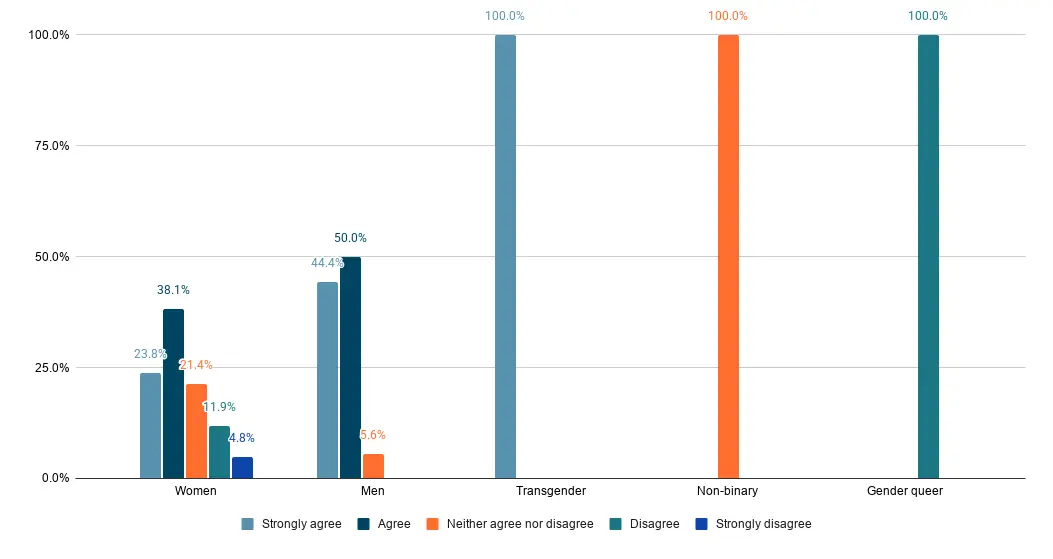
Experiences of physical security vary greatly by gender.
Our study found that experiences of physical security vary greatly by gender. Nearly 95 percent of the male frontline social workers surveyed said they felt physically secure while performing fieldwork. In contrast, only about 61.9 percent of the women respondents affirmed that they experience physical security. One respondent each identified as transgender, non-binary, and genderqueer. The transgender respondent felt secure, the non-binary respondent was neutral, and the genderqueer respondent did not feel secure. Given the small numbers, these findings cannot be generalised.
Respondents also highlighted inadequate personal protective equipment, unsafe working environments, and health and hygiene concerns. Several of them reported harassment and verbal or physical abuse from the families of both survivors and the accused, as well as threats from community members to stop visiting their villages or face consequences. Others described being deployed alone to areas near railway tracks and industrial settlements, or facing harassment while travelling to late-night and early-morning shifts. Working alone in unsafe locations emerged as a distinct and recurring challenge, particularly for women and gender-diverse frontline social workers.
3. Psycho-emotional security
This refers to feeling emotionally and psychologically safe and supported at work. Respondents described the cumulative impact of regularly engaging with violence, abuse, crisis, and trauma while receiving limited organisation support to process these experiences. A helpline worker described the emotionally demanding nature of her work: “I attend distress calls over a helpline number. Due to the nature of our frontline work, mental health challenges are quite common. Constantly listening to stories of violence and abuse is triggering and emotionally exhausting. There is also a need to be calm and patient on every call, which is difficult as we handle a high volume of calls with little rest in between.”
Severe emotional distress and burnout emerged as common experiences across the survey.
More than one in five respondents (22.2 percent) indicated that they were facing mental health challenges. Respondents described feeling a constant sense of fear about the present as well as the future. Worries and anxiety about the safety of themselves and their dependents were compounded by lack of assured support from their employers, donors, and leadership colleagues in potential crisis situations.
Although 65–70 percent of the respondents had access to an inclusive and discrimination-free workplace environment, supportive leave policies, and a channel to report concerns to leadership, fewer than half had access to confidential, non-judgmental mental health support, and regular well-being check-ins. As a result, severe emotional distress and burnout emerged as common experiences across the survey.

Where change needs to start
The frontline social workers who participated in our study also pointed to what needed to change. Their suggestions span organisational priorities, culture, policies, practices, and support systems.
1. Building safety into organisational planning and budgeting
Organisations should build frontline safety training and secure travel arrangements into project design and budgets from the start. This requires nonprofit leaders to work with funders that support fair remuneration, social protection, and long-term security for frontline social workers. Funders, in turn, should support dedicated well-being budgets and assess these measures during grant applications and reviews.
Field safety protocols and emergency response procedures should be developed in consultation with frontline staff and reviewed regularly. These should include 24/7 emergency contacts for medical, legal, and logistical support, with clear escalation procedures and defined response timelines. At Shakti Shalini, our 24/7 survivor helpline requires staff to work round-the-clock shifts. To keep them safe, we budgeted for vetted transport during late-night shifts, which was built into the project design from its inception.
2. Strengthen field and workplace security
In high-risk areas, organisations should prioritise buddy systems and team-based approaches over lone working. They should arrange secure transport, particularly for late-night and early-morning shifts. Staff should be provided with appropriate protective equipment (such as masks, gloves, headgear, and task-appropriate footwear), along with official identity cards and authorisation letters for field visits.
Within the workplace, organisations should ensure basic facilities, such as safe drinking water, clean and functional gender-segregated washrooms, and amenities that support menstrual health and hygiene. Controlled access systems, like key cards, and visitor screening procedures can further strengthen workplace security.
Organisations should also provide regular training on situational awareness, conflict de-escalation, crisis response, and context-appropriate self-defence. They should strictly implement the Sexual Harassment of Women at Workplace (Prevention, Prohibition and Redressal) Act, 2013, and set up grievance redressal mechanisms with clear timelines and accountability.
3. Build a culture of care
Organisations should recognise frontline labour as essential and engage regularly with frontline staff to understand field realities, rather than dismissing their concerns as occupational hazards. Organisations should prioritise both self-care and collective care, including training on mindfulness and grounding techniques, and creating opportunities for staff to support one another.
Organisations should also adopt trauma-informed ways of working, setting norms around reasonable working hours and workloads, conducting regular one-to-one well-being check-ins, and providing restorative breaks after emotionally demanding cases.
At Shakti Shalini, for instance, regular individual and team well-being check-ins have received positive feedback from staff. Organisations should treat confidential, non-judgmental mental health support, particularly for staff handling cases involving violence and trauma, as a priority.
4. Ensure job security, fair and lawful remuneration, and employee benefits
Every frontline worker should receive a written employment contract outlining their roles, responsibilities, pay, and benefits. Organisations should ensure equal pay for equal work, comply with labour laws, and pay salaries, reimbursements, and compensation on time. They should also strengthen long-term security through health, accident, and term insurance, provident fund contributions, old-age pensions, and emergency funds for staff facing crises.
These recommendations are interconnected. Nonprofit leaders, funding agencies, and state actors need to act together to build a system that prioritises the rights and well-being of frontline social workers. As one frontline social worker put it, “A system that protects its workers automatically protects its mission.” For funders, organisations, and state actors, that is the starting point.
*Name changed to maintain confidentiality.
—
Know more
- Read more about the funding gap standing between nonprofits and the staff investment they need.
- Read more about why social sector burnout data overlooks fieldworkers, especially those in rural India.