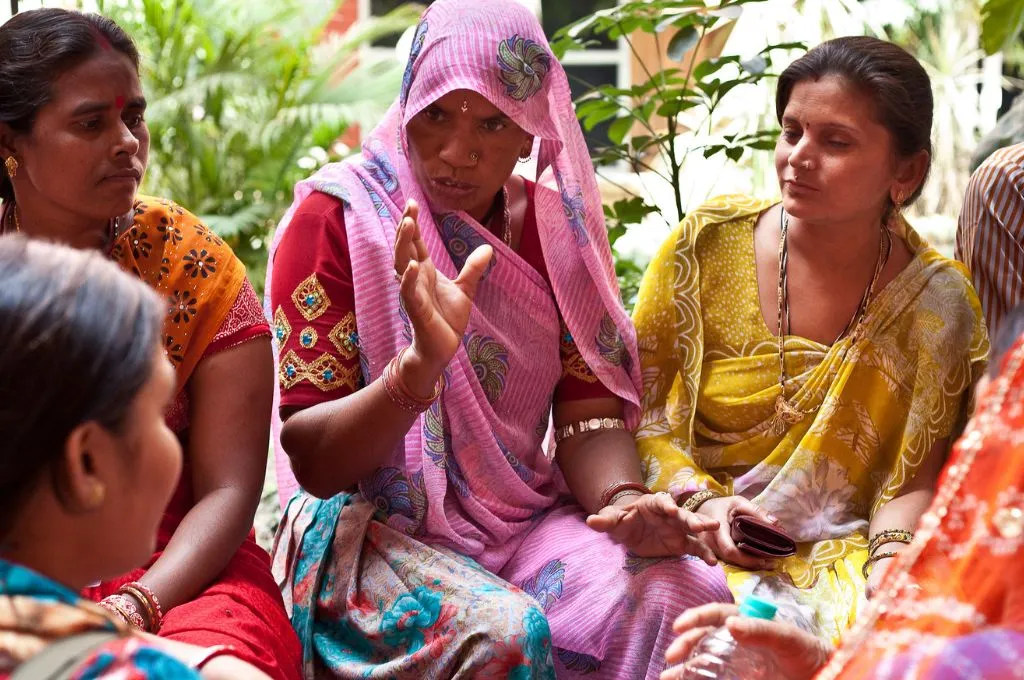
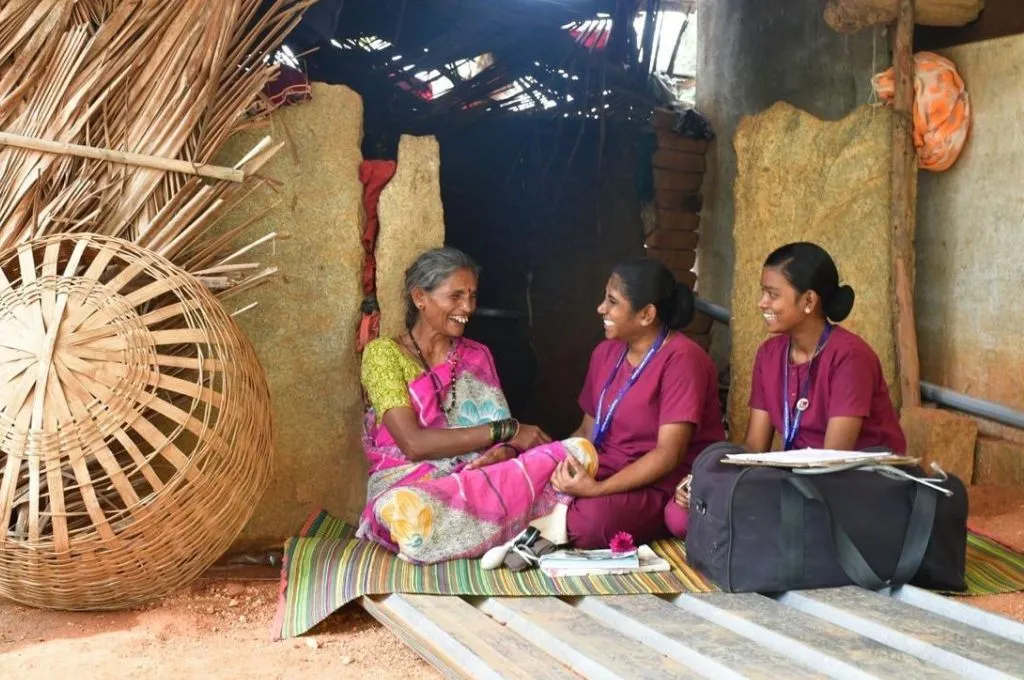
For decades, any serious conversation about public health in India’s Northeast has begun with an apology for the gaps in research, evidence, and data. Policy briefs hedge with caveats. Academic papers note the absence of region-specific studies. Programme reviews flag poor reporting. And somewhere in that recurring acknowledgement of what is missing, the Northeast has become an afterthought in national health discussions—visible on the map, but often invisible in the evidence. Meghalaya exemplified this most sharply.
A state of more than 30 lakh people, governed through a layered patchwork of district administrations, traditional institutions, and autonomous district councils, it rarely appeared in national health literature except as a data point in a table, or worse, as a missing value.
That absence of reliable data has real consequences. When data does not exist, decisions get made anyway on assumptions borrowed from elsewhere, on national averages that erase local variation, on the instincts of administrators who might or might not understand the terrain. The absence of data is never neutral. It shapes who gets counted, whose problems get noticed, and whose realities remain invisible.

Small population size is a structural constraint that national survey design has never adequately addressed. National surveys like the National Family Health Survey (NFHS) and the Health Management Information System (HMIS) often struggle to produce reliable district-level estimates in small, geographically fragmented states. A district health officer in Ri Bhoi or South West Khasi Hills cannot plan services effectively on the basis of state-level averages that may bear no relation to their catchment.
This is why the shift now underway in Meghalaya deserves serious attention. The state has invested meaningfully in the architecture of data governance. For instance, the State Health Systems Resource Centre has published the Meghalaya Health Atlas, a district-level compilation of key health indicators designed to support evidence-based planning, and has formalised an agreement with Oxford Policy Management India to conduct an annual health survey focused on continuous monitoring and evaluation.
As a result, monthly and quarterly review meetings between the state Administrative Office and the Department of Medical and Health Office have become genuine feedback loops rather than routine compliance exercises. These meetings focus on discussing maternal and infant mortality, immunisation coverage, refusal cases, institutional delivery, and other critical issues. Aggregated data now cascades from district to community health centres, primary health centres, and sub-centres for contextualised discussion. Frontline workers, using terms like target, coverage, and catchment with a fluency they did not have a decade ago, are now increasingly expected to interpret and discuss their own numbers. Tools like the MOTHER app for real-time maternal health monitoring and an expanding ecosystem of dashboards and digital platforms signal a genuine ambition to govern by evidence.
But here is the uncomfortable truth that sits inside this progress: Meghalaya has built the room; it has not yet filled it with honest numbers.
The governance infrastructure runs ahead of the data
The state’s investment in review culture and monitoring infrastructure is real and commendable. Equipping district and block-level officials to analyse and act on their own data is, at its core, an attempt to make local knowledge legible within formal systems and closes the gap between what frontline workers know from daily experience and what the system officially records. What is less comfortable to acknowledge is that this infrastructure is only as good as the data flowing through it. And the quality of that data remains deeply uneven.

Each health sub-centre in Meghalaya is designed to cover roughly 3,000 people, but in practice this can mean anywhere from nine to 28 villages.
A review meeting can only discuss what has been captured. Where reporting is incomplete, facilities are understaffed, and community health workers are managing caseloads that leave no time for documentation, the data reaching the district table is only a partial picture. The problem is not merely one of volume, it is one of systematic skew. The hardest-to-reach communities, precisely those in remote blocks and villages accessible only by foot, are also the easiest to miss in official records.
Each health sub-centre in Meghalaya is designed to cover roughly 3,000 people, but in practice this can mean anywhere from nine to 28 villages. This means that before caseload pressure or geography even enter the picture, a single ASHA worker’s catchment area is already too scattered for any one worker to document consistently. In effect, geographic isolation and data invisibility compound each other.
The transition to digital health systems through the Ayushman Bharat Digital Mission and other platforms has added complexity without always adding clarity. In districts like West Garo Hills, the rollout has introduced parallel reporting burdens, with health workers duplicating data entry across paper and digital systems simultaneously. For example, ASHA workers continue to complete Community-Based Assessment Checklist (CBAC) forms on paper while also entering the same information into the NCD (noncommunicable diseases) portal. This parallel reporting increases administrative workload, reduces the time available for community outreach, and raises the risk of data inconsistencies across systems. The compounded workload has not improved data quality; in some cases, it has degraded it.
Practising data transparency
The problem is not simply technical. It is cultural and political, and it operates at both ends of the system.
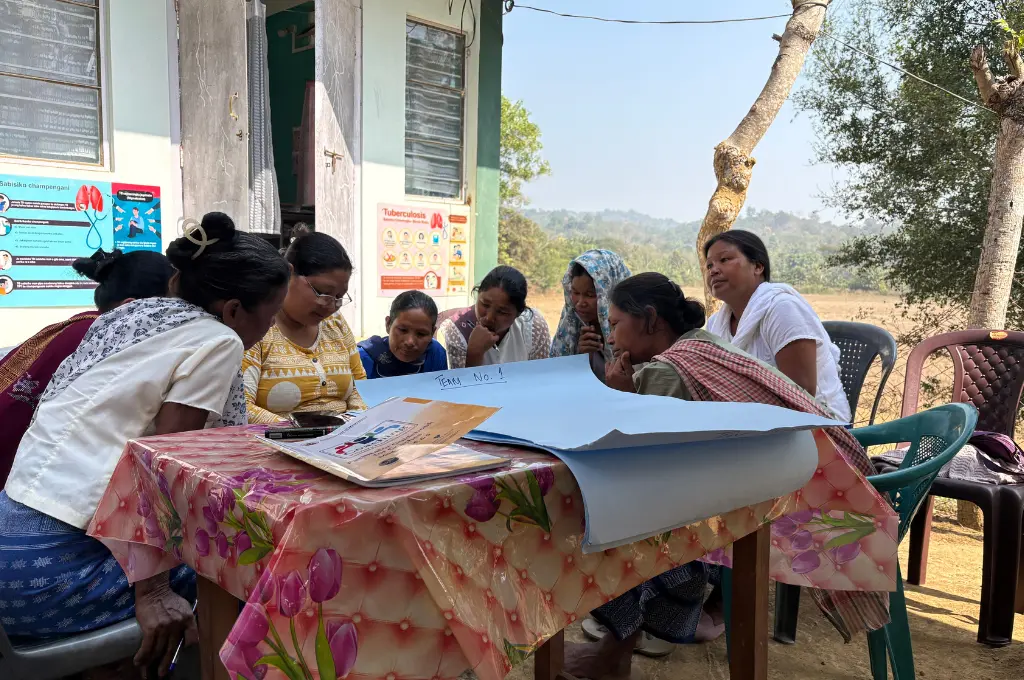
At the top, data systems do not drive themselves. They require people in positions of authority who have decided that honest performance data (including data that reflects poorly on their own programmes) is more valuable than comfortable silence. This is rarer than it sounds. Where that decision has been made in Meghalaya, the results are visible: Review meetings become real, numbers get interrogated, accountability moves downward. One clear example of this approach is Meghalaya’s Rescue Mission, a state-wide initiative aimed at addressing its consistently high maternal mortality rate. Its review architecture is intentionally simple: At district-level meetings, participants such as the district commissioner and district medical and health officer review institutional delivery and maternal and child deaths. They identify the underlying causes and develop action plans based on implementation challenges. Additionally, districts are held accountable for the progress made on their previous month’s action plan during the next meeting.
Where the data is not being dived into, even the best-designed infrastructure becomes ceremonial— populated with figures that satisfy the format without disturbing anyone.
When data quality problems surface, the instinct is too often to look at frontline workers as the point of failure.
At the bottom, the burden falls on a frontline worker who is asked to be simultaneously a care provider, a community mobiliser, and a data entry operator, often on a phone with intermittent connectivity, across multiple formats, for a catchment that would challenge anyone. When data quality problems surface, the instinct is too often to look at her as the point of failure. But a health worker navigating five reporting systems while managing a large rural population is not failing to comply. She is doing what she can within a system that was designed without her reality in mind. The failure is upstream. Accountability, if it is to mean anything, must be too. Improving the quality of data that flows into Meghalaya’s health governance is not a matter of better technology or more frequent reviews alone. The state must take deliberate and sustained action on several fronts to address this issue by:
1. Establishing a data quality audit function
Meghalaya needs a standing mechanism to audit the reliability and completeness of health data that is institutionally separated from a programme data. Programmes rarely like to publish numbers that make them look ineffective. An independent audit function, whether housed within the state health agency, a technical institution, or a designated state-level body, can identify systematic gaps, flag implausible patterns, and provide district officials with an honest baseline from which to plan. Without this, even the best review culture operates on an uncertain foundation.
2. Prioritising sub-district data
State-level and district-level averages are insufficient for a state as internally diverse as Meghalaya. The state comprises three major regions: Garo Hills, Khasi Hills, and Jaintia Hills—each with distinct ethnic groups, customs, food habits, languages, terrain, and health system challenges. A single state average can obscure substantial differences in healthcare access, service utilisation, and health outcomes across these regions. Health planning should be anchored in block-level and, where feasible, village-level data across key indicators such as maternal mortality, immunisation coverage, nutritional status, and disease burden. This requires deliberate investment in sub-district data collection capacity, including support for frontline workers who are currently the primary data generators but rarely the primary data users.
3. Rationalising the reporting burden on frontline health workers
The current proliferation of reporting formats across manual registers, online portals, and programme-specific platforms is not a data strategy. It is an accumulation of mandates without a coherent architecture. The state should conduct a comprehensive audit of all reporting requirements placed on ASHAs, ANMs, and the staff at primary healthcare centres, identify redundancies and conflicts, and move toward a single-point entry model with downstream disaggregation.
4. Building policy memory through structured documentation
Much of Meghalaya’s institutional knowledge about what has worked, what has failed, and what the specific contours of local health challenges look like resides in individuals who are eventually transferred, retired, or reassigned. When they leave, their memory leaves the system. The state should mandate structured documentation of key programme decisions, their evidence base, and their outcomes, not as administrative archives, but as accessible planning resources for incoming officials.
Before designing new interventions or allocating resources, programme managers could review documented lessons to identify strategies that proved effective, understand why certain approaches failed, anticipate implementation bottlenecks, and adapt interventions, rather than repeating generic solutions. Such documentation can also support the orientation of newly appointed officials, reduce the disruption caused by frequent staff transfers, and ensure continuity of programmes. Over time, this would enable a shift from planning based primarily on individual experience to planning grounded in accumulated institutional learning.
Meghalaya is not at the beginning of this journey. Its governance architecture built over the last five years is real, and the cultural shift it represents toward treating data as a tool of accountability rather than a compliance artefact is significant. That shift should be protected and sustained.
But the gap between the sophistication of the state’s review infrastructure and the quality of the data flowing through it is the central challenge of this moment. Closing that gap requires more than better dashboards and more frequent meetings. It requires a reckoning with the structural conditions that produce unreliable data in the first place: the under-resourced frontline, the fragmented reporting architecture, and the institutional incentives that reward apparent performance over honest measurement. The task is not to wait for better evidence to arrive. It is to build systems that make the evidence already present visible, usable, and true.
—
Know more
- Learn why public healthcare needs institutions that pool risk, reward effort, and take responsibility for outcomes.
- Read about the causes of the high incidence of cancer in the Northeast.