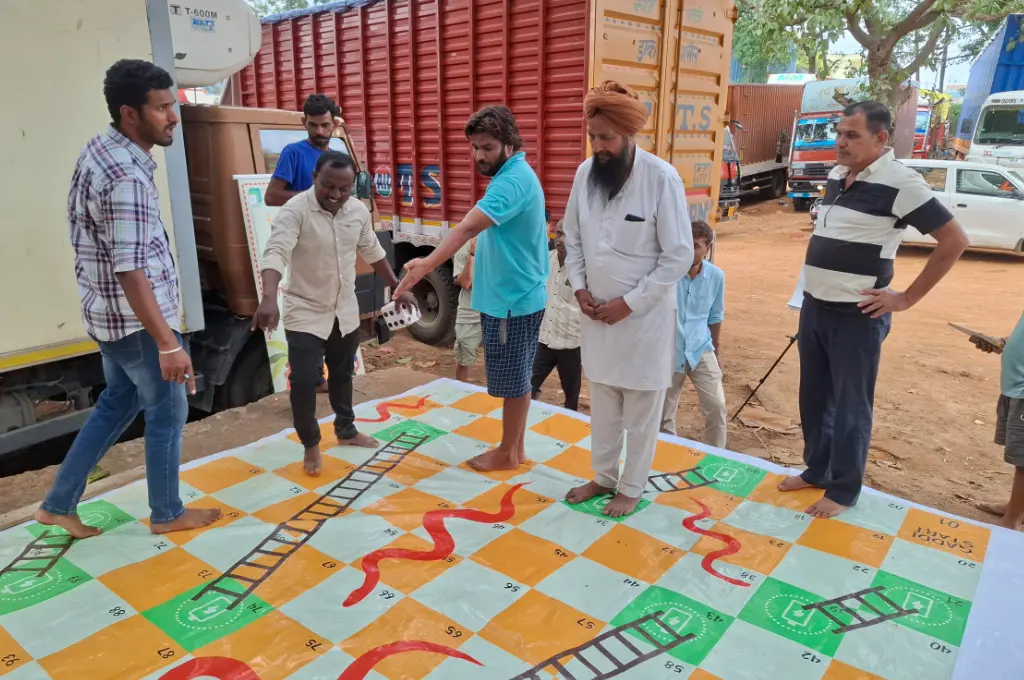
Every year, organisations working across themes in the social sector invest significant time and resources in conferences. They book auditoriums, invite keynote speakers, curate panel discussions, and design detailed agendas weeks in advance. These gatherings undoubtedly create opportunities for learning and networking. Yet many participants are barely allowed to contribute. The agenda, the speakers, and often even the questions have already been decided before they enter the room.
There are conversations both within and outside the sector about organising unconferences that break out of this mould and dismantle the top-down approach of traditional conferences. One way to do this is to encourage grassroots organisations to flip the script and run these dialogues so that they can redefine participation. However, these organisations, often running on shoestring budgets, neither have the time nor financial or human resources to plan such programmes. Is building an alternative platform even possible for them?
We run Pi Jam Foundation, a nonprofit based in Maharashtra, that aims to equip children and educators in under-resourced schools across India with access to affordable technology, and we have grappled with these questions. Recently, we organised a low-resource unconference to see whether it was actually possible, and we have lessons to share.
The premise: AI in education
In April 2026, with the evolving role of artificial intelligence (AI) in the education space, we began thinking about organising a public dialogue on AI in K-12 education.
With a budget of approximately INR 45,000, we brought together more than 35 participants, including students, teachers, researchers, nonprofit practitioners, independent professionals, and a parent. We had advertised primarily on LinkedIn, and a little on Instagram, and WhatsApp, and did not get enough time to reach stakeholders connected with our work, which affected the participant demographic, particularly amongst parents.
Unlike a hotel or conference centre, it was organised in a BMC Marathi school in Mumbai, a space familiar and accessible to every stakeholder.
Could a government school become a conference venue?
Participation was free and open to anyone interested in AI in education. Students rarely find themselves in the same room as researchers. Parents are seldom invited into discussions about AI in education. Teachers often become recipients of recommendations rather than contributors to them. These gaps are even more pronounced in under-resourced schools, where access to technology is often unequal.
We wanted to create a space where these perspectives could meet. We thought: What if the people experiencing the problem every day became the people shaping the conversation? Could a small organisation create a rich learning experience with modest resources? Could a government school become a conference venue? Could sticky notes replace pre-planned agendas? Could students question researchers? Could teachers learn from children? Could participants leave not only with new ideas about AI but also with the confidence to organise similar conversations in their own communities?

We deliberately wanted to remove barriers that often prevent people from participating in conferences such as registration fees, institutional affiliations, or the expectation that one needed to be an ‘expert’ to contribute.
In this process, we witnessed firsthand how small-scale multi-stakeholder dialogues can be made possible.
1. What’s in an agenda?
Unlike a traditional conference, an unconference does not begin with a predetermined agenda. Instead, participants collectively create the agenda based on the questions, experiences, and ideas they bring into the room. While this format has been used internationally for many years, it remains relatively uncommon in India, particularly in the education and development sectors.
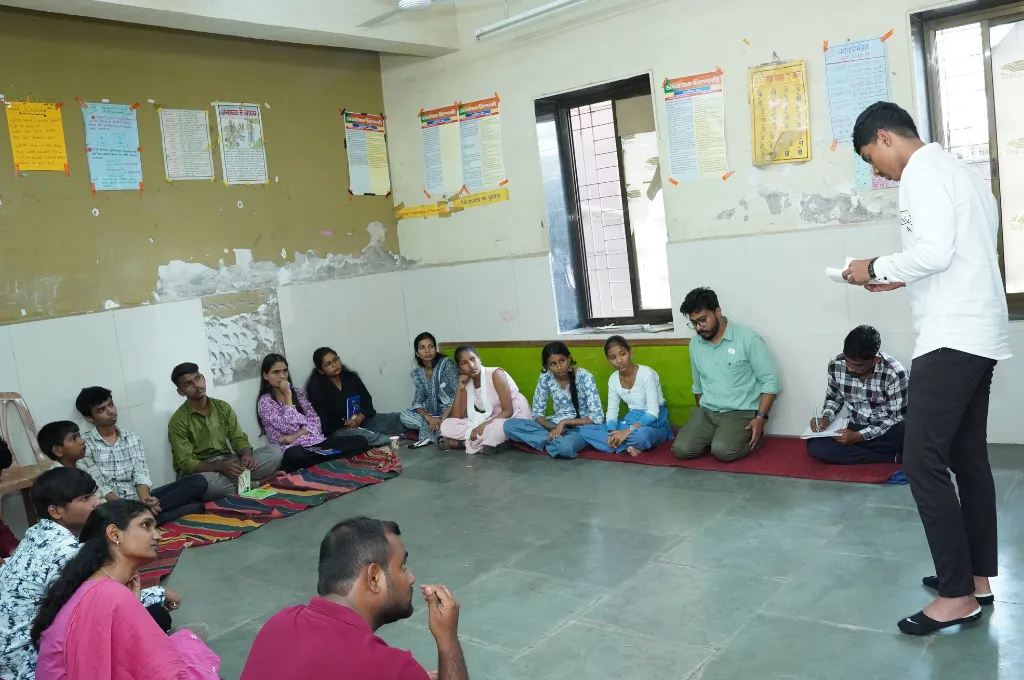
For us, the day itself began differently from a conventional conference. There were no inaugural speeches, keynote addresses, or participant introductions. Instead, everyone gathered in a large circle and participated in simple movement-based activities that encouraged laughter, interaction, and ease. Before discussing AI, participants first became comfortable with one another.
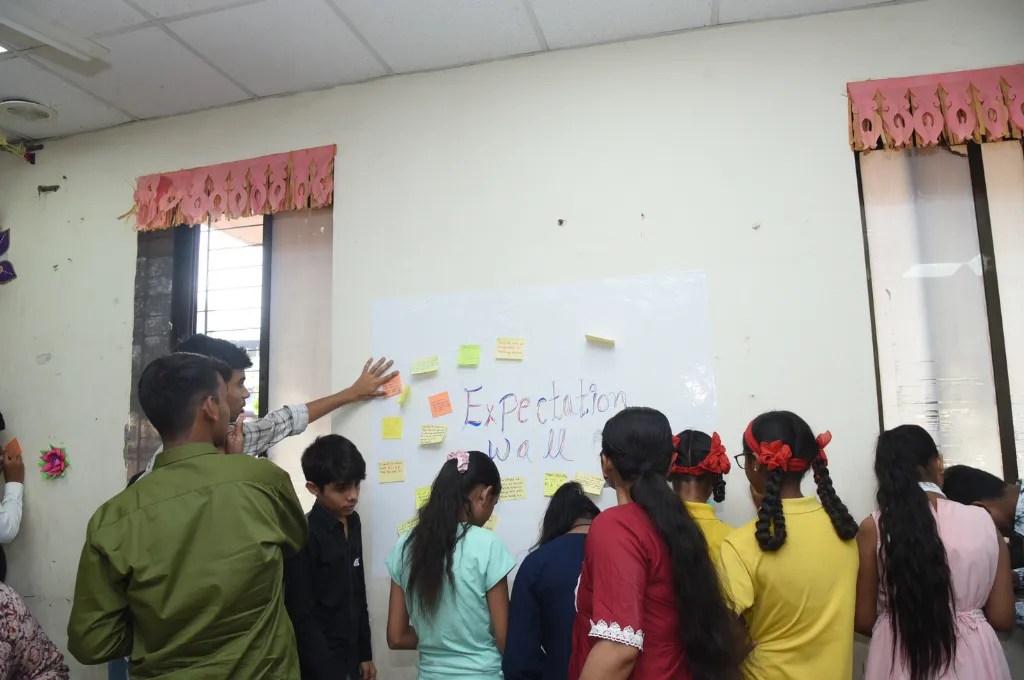
To build an agenda for the discussion, participants were invited to write their questions, curiosities, concerns, and expectations about AI on sticky notes and place them on what we called an expectation wall. The facilitators clustered the notes to find common themes. Five themes emerged naturally and shaped the rest of the day’s agenda: understanding what AI is, using AI to improve work and efficiency, exploring how AI shapes thinking, examining its opportunities and risks, and reimagining teaching in an AI-enabled world.
Participants then volunteered to facilitate sessions around these themes. By the end of the agenda-setting exercise, 12 sessions had been scheduled across three parallel classrooms, three of them facilitated by students.
2. What’s in a panel?
With an agenda and the sessions in place, we still had to answer questions such as: How do we help strangers feel comfortable speaking to one another? How do we reduce hierarchy? How do we ensure that students feel as confident asking questions as researchers? What kind of space encourages dialogue rather than presentations?
Although participants had only proposed the topics they wished to facilitate, each session evolved in its own way. Some became lively debates, while others took the form of roundtable discussions where everyone contributed equally. Some facilitators guided enquiry, posing questions that encouraged participants to think together rather than search for answers, while others designed activity-based experiences that invited people to learn by doing.
We deliberately chose not to introduce the facilitators, so students did not know whether the adults in the room were teachers, researchers, or principals. This gave them freedom to speak the way they wanted because hierarchies of authority were never established during the event. As a result, during a student-led session, researchers, teachers, and practitioners found themselves responding to questions posed by children. Students challenged assumptions, adults listened carefully, and the conversation unfolded as one between equals.
Throughout the day, conversations flowed naturally between Marathi, Hindi, and English.
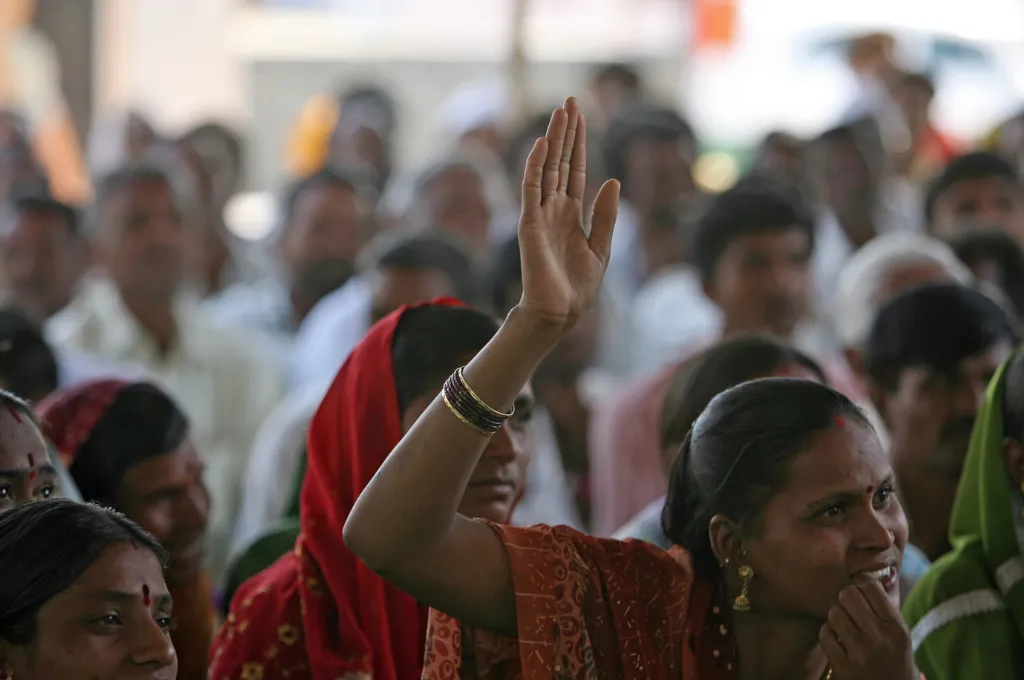
Certain statements about AI led to lively discussions. For example, when it was said that “AI can never replace a teacher as they provide emotional support that AI could never provide”, the students didn’t just agree but also added their own critical thoughts. Some said, “But I also ask AI about my personal issues or career choices. It gives us valuable information and it’s up to us how we utilise it.”
There was also a discussion on whether AI should be used at all in a classroom. While many adults were focussed on its impact on teachers, a student asked, “If it is going to be used on children, then they should be the ones answering the question.”
Throughout the day, conversations flowed naturally between Marathi, Hindi, and English, allowing participants to express themselves in the language they were most comfortable with. Since there was no insistence on a common language, participants felt comfortable sharing their lived experiences.
Meaningful dialogue requires removing hierarchies so that people can contribute freely. Students were not waiting to be called upon; they were facilitating discussions, questioning adults, and confidently presenting their viewpoints. Teachers, researchers, practitioners, and nonprofit professionals were no longer occupying the role of experts expected to provide answers. Instead, they became participants learning alongside everyone else.
Students spoke about using AI in their everyday lives and questioned how it might influence their ability to think. Teachers were curious about integrating AI into classroom practice. Researchers discussed broader ethical implications, while practitioners reflected on implementation challenges. Parents wondered what AI meant for their children’s future. Everyone was talking about the same technology, yet each stakeholder was viewing it through a different lens.
The concluding session brought these reflections together. Several participants shared that they had arrived expecting to listen but found themselves speaking throughout the day. Others remarked that they had come believing they were experts with knowledge to share but left recognising that no one person held all the answers.
3. What’s in a budget?
We had a budget of INR 45,000 that was utilised for food, photography, printing material, and the venue. We also worked with the vendors with whom we had existing relationships, which helped reduce costs.
Depending on the size of the venue and the number of participants, this amount can be further reduced. Prior conversations with panchayats and schools might even allow for free use of office and classroom spaces. By reusing old newspapers and cardboard boxes, organisations can reduce stationery costs. Additionally, food can be crowdsourced from parents and other donors, which will significantly reduce the expense.
Doing it all over again
While the event was successful, we felt that if we had more time and had the benefit of hindsight, it could have fared better in terms of participation, outreach, and accessibility. If we organise another unconference, there are several things we would do differently such as:
- Rethinking outreach: Different stakeholder groups require different outreach strategies. While LinkedIn proved effective for reaching researchers, practitioners, and nonprofits, it was less successful in reaching teachers, parents, and students, who often respond better to direct engagement through schools, community networks, and local organisations. It’s better to first identify which stakeholder groups you would like represented at the event and then reach out to them directly.
- Documenting insights: We realised that documenting dialogue requires trained observers who can capture not only what was said but also how conversations evolved, moments of disagreement, shifts in thinking, and emerging insights. Similarly, while multilingual discussions enriched participation, they also highlighted the need for language facilitators who can bridge conversations across Marathi, Hindi, and English. Additionally, involving local volunteers who speak regional languages can be a beneficial communication strategy.
- Designing for access: A parent with a hearing disability attended the unconference and stayed throughout the day, relying on volunteers to understand the discussions. Her presence reminded us that inclusive dialogue requires accessibility to be designed into the experience from the outset. Events should plan for accessibility from the outset, including interpreters, volunteers, and other forms of participant support where required.
- Following the rule of two feet: Usually in conferences, participants don’t feel comfortable enough to leave a panel midway even if the conversation, language, or issue does not resonate with them. When a participant decides to leave a session or move to another because it doesn’t do justice to their time, they make a choice. This choice is a very important part of an unconference which prides itself on agency rather than obedience. For this reason, we had asked participants to freely move around during sessions based on interest. But very few chose to do so. We suspect this reflects how deeply we are conditioned by traditional conference and classroom norms, where staying in one room is considered respectful and expected. Practising this may require repeated exposure for people to fully exercise the freedoms offered by the format.
The most encouraging lesson for us was that none of what we did required expensive infrastructure, elaborate conference halls, or celebrity speakers. A government school, movable furniture, chart papers, sticky notes, thoughtful facilitation, and a willingness to trust participants were enough to create a meaningful learning experience.
For grassroots organisations, this might be the most important takeaway. Meaningful dialogue does not begin with a large budget. It begins with designing spaces where people feel that their experiences matter, their questions are valued, and their voices have an equal place in shaping the conversation.
—
Know more
- Read more about how conference spaces can be exclusive.
- Understand how social exclusion impacts a person’s sense of agency.