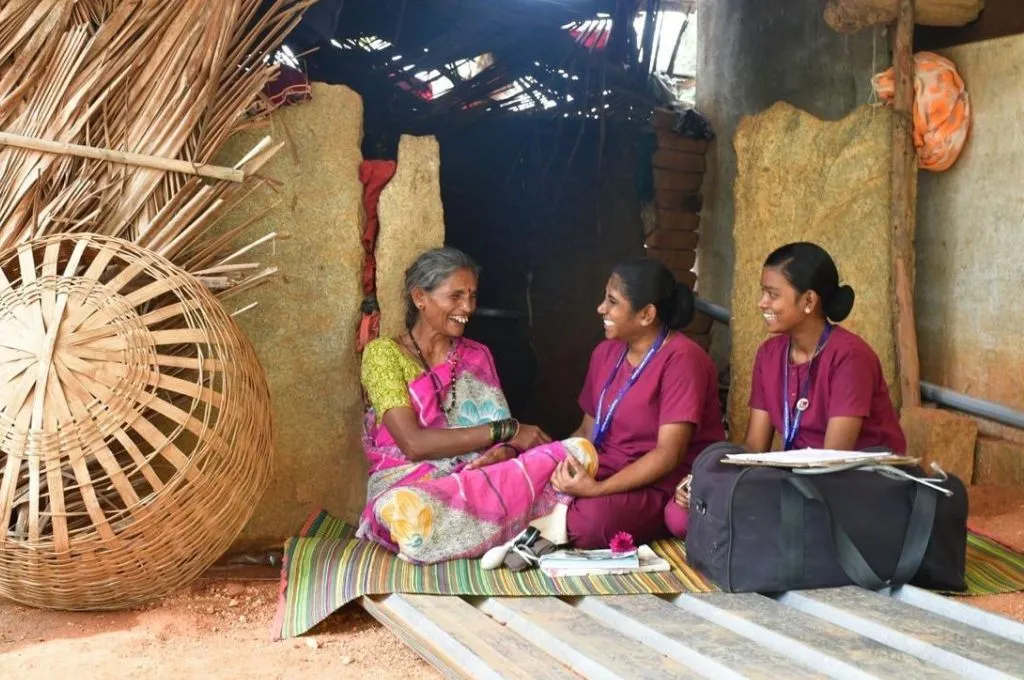
Nearly 50 years after the Alma-Ata Declaration of 1978, primary healthcare remains one of the core tenets of global health. Governments endorse it; international organisations advocate for it; and researchers routinely point to it as the foundation of equitable health systems.
Despite this broad consensus, surprisingly little agreement exists about what primary healthcare constitutes in practice. For some, it refers to a package of services delivered through clinics and health centres close to communities. For others, it is a broader philosophy of care that emphasises prevention, participation, continuity, equity, and responsiveness to local needs.
These varied interpretations have become increasingly relevant in recent years as countries invest in typically tertiary and supplemental health services, including digital systems, insurance schemes, specialist services, and large-scale hospital infrastructure.

Against this backdrop, a recently published collection of essays titled Health at the Margins: Writings on Primary Care from Rural South Rajasthan offers a closer look at healthcare at the grassroots. Edited by Pavitra Mohan and Ashmita Gulechha, the text draws from the work of Basic Healthcare Services (BHS), an Udaipur-based nonprofit working with tribal and rural communities in southern Rajasthan. The contributors include doctors, nurses, researchers, programme managers, and frontline practitioners. Together, they address issues ranging from maternal health, tuberculosis, and child malnutrition, to migration, nursing practice, COVID-19, silicosis, and health financing and system design.
Read individually, the essays provide valuable insights into healthcare challenges in one part of rural India. Read together, they present a coherent vision of primary healthcare rooted not primarily in facilities or programmes but in relationships, lived realities, and community-based responsibility.
Three themes in the collection stand out, suggesting that effective primary healthcare is: a) relational, b) socially embedded, and c) systems-oriented.
Relational
The strongest and most consistent message running through the collection is that primary healthcare is deeply relational, requiring both trust and dignity.
Patients seek care because they trust providers. Families agree to referrals because they trust health workers. Communities engage with health services because they trust the institutions behind them. Without these relationships, many of the interventions described in the collection would simply not work.

For instance, the essay ‘Of Meenas, Migrants and Medicine’ describes the early years of community engagement around BHS Clinics. The response was not immediate enthusiasm. Many villagers viewed the clinics with suspicion. One BHS team member recalled people asking:
“What kind of medicine can be so cheap? Then they were afraid we might do some magic on them.”
Over time, however, the relationship changed. The clinics remained present, and staff continued to engage with the local communities. People observed the care that was being provided and began to develop confidence in the services.
The collection repeatedly returns to this idea. Trust emerges through visible acts of competence, commitment, and care, rather than through passive messaging and awareness campaigns.
One of the clearest examples appears in ‘An Evening in Morwal’, where a nurse coordinator faces a critically ill patient and an erratic mobile network. She recounts:
“I spoke to Sir (primary healthcare physician) who advised to start IV fluids and Insulin. The phone line here is very erratic and after some time the phone stopped working. It was important to discuss the progress with Sir, so I went with Hemant (the health worker) to the nearby village (about 5 kilometres away) on a motorcycle. The network there is on top of a hill. I walked up from the road, spoke to Sir who advised the treatment. This visit took time but family was very supportive. They told me, ‘Sister, we are seeing your efforts and concern and we trust you. We will wait. You please go and talk to your Sir.’”
Trust influences whether patients seek care early, adhere to treatment, disclose sensitive information, and continue engaging with providers over time.
Here, the family’s trust in the nurse did not stem from her representing an institution, using a specific technology, or making a clinical decision—it was her commitment to their care in a time of crisis.
Chapters on tuberculosis, maternal care, and community outreach similarly demonstrate that relationships are often the difference between a service being available and actually being used. Trust influences whether patients seek care early, adhere to treatment, accept referrals, disclose sensitive information, and continue engaging with providers over time. We routinely measure facilities, medicines, staff, and finances. Yet without trust, even technically sound services struggle to achieve their goals.
A related theme concerns dignity. Patients are not portrayed as passive recipients of care. Rather, the essays repeatedly emphasise the importance of respectful engagement, listening, and recognition of people’s circumstances. Trust and dignity emerge together. Communities trust institutions that treat them with respect, and in turn, respectful care is an important pathway for building trust.
These accounts present primary healthcare as fundamentally relational. Its effectiveness depends on both clinical competence and the nature of the relationships that connect providers, patients, families, and communities.
Socially embedded
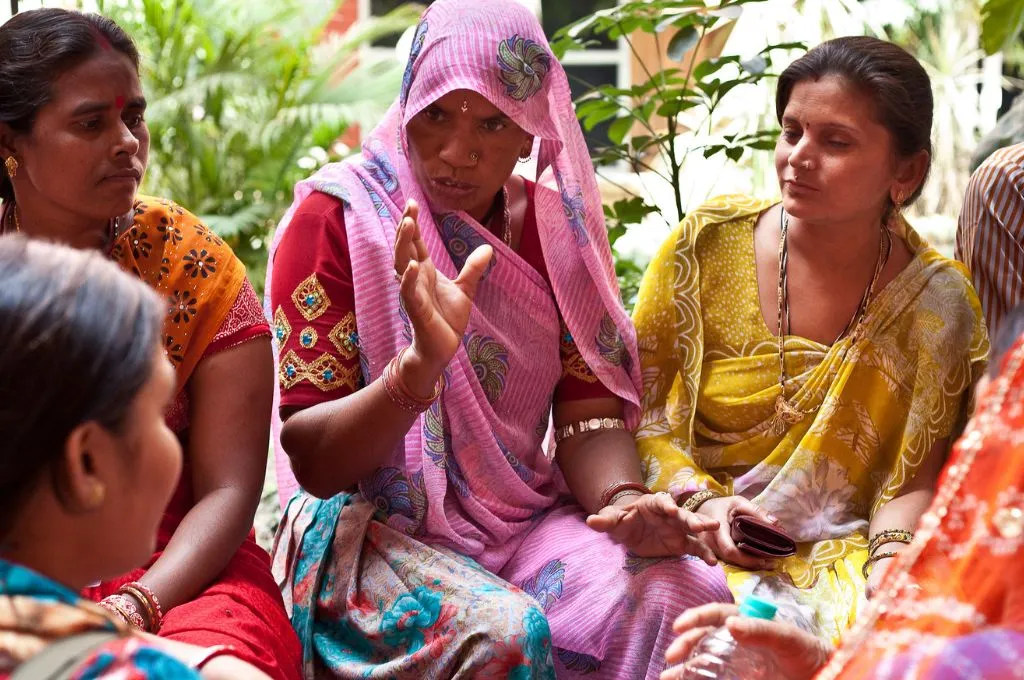
A second major theme concerns the relationship between illness and the wider realities of people’s lives.
The essays consistently challenge the idea that disease can be understood in abstraction from its social context. Illness is intertwined with migration, livelihoods, food insecurity, debt, gender, geography, and social exclusion. The collection demonstrates that patients experience health problems not as isolated clinical events but as disruptions within complex social worlds. The essay ‘Beyond the Pathology of a Disease’ captures the experience of the family of 19-year-old Khera as he received treatment for Pulmonary TB:
“…Kosa ji prepared his mind to support his son in recovery. He rented a kachha small house that was located near the road for ease of access to the market. Every alternate day, Khera would be visited by the health worker who would spend time with him, motivating him, and making him feel at ease. For Khera to recover, both timely medicine and high protein and iron rich diet were essential. Kosa ji, who lived on cultivating a small plot of land, did not have enough savings to provide for his dietary requirements. However, he ensured the boy was provided cereals and vegetables that could be procured within his capacity…”
Tuberculosis affects livelihoods, family relationships, nutrition, social standing, and economic security. The clinical condition is only one part of the story. This perspective appears throughout the collection.
In ‘Providing Migrant-Responsive Services’, Lalki, whose husband has migrated to Gujarat for work, finds herself completely alone when she starts experiencing labour pains:
“She knew the ‘time’ had arrived. The nearest PHC located in Nithauwa Panchayat was 15 kilometres from her house. She tried calling the 104 but there was no way by which the four-wheeler could cross the hills. Lalki was helpless and lonely.”
Through an account of childbirth, the essay examines the intersections of migration, gender, social support, and access to care.
Primary healthcare occupies a unique position at the interface between medicine and everyday life.
Similar patterns emerge in the essays on child malnutrition, where it is linked to feeding practices as well as migration, water scarcity, shrinking livelihood opportunities, and long-standing forms of social marginalisation. Likewise, the chapter on silicosis highlights the relationship between occupational disease and hazardous forms of labour. Other essays describe how remoteness, poverty, and weak access to public services shape both health risks and outcomes.
These insights have important implications because, unlike specialist services organised around particular conditions, primary healthcare occupies a unique position at the interface between medicine and everyday life. Providers working in communities are often the first to recognise how illness interacts with employment, migration, caregiving responsibilities, food security, education, and social support. As such, health services must be attentive to these realities and adapt treatment accordingly.
In this sense, the collection returns to one of the foundational ideas of Alma-Ata: Health is shaped not only by medical services but also by the conditions in which people are born, live, work, and age. What distinguishes these essays is that they show what this principle looks like on the ground. Rather than discussing social determinants in abstract terms, they reveal how they appear in the daily work of caring for patients.
Systems-oriented
The third major theme concerns the organisation of healthcare systems. Across the collection, the most successful examples of care are found where services remain close to communities while maintaining connections to wider systems of support. The essays repeatedly argue that responsibility for care should remain as local as possible, even when specialist expertise must be accessed elsewhere.
Distance emerges as a recurring challenge. For families living in remote areas, inaccessible services are essentially absent services. Even if a facility exists, can it be reached in time? Is transport available? Can care be sustained over months or years?
Providers who remain close to communities can recognise needs that might never become visible in more distant institutions.
This is particularly evident in maternal health narratives. Timely access to nearby services often makes the difference between a manageable complication and a potentially life-threatening situation. Similar dynamics appear in the chapter on acute rheumatic fever, where long-term treatment requires regular follow-up and ongoing engagement with the health system.
The collection also brings the focus back to the central role of nurses and community health workers. Instead of peripheral actors or substitutes for physicians, they are essential members of the care team who identify problems early, support continuity of treatment, coordinate referrals, and maintain relationships with families.
In ‘An Evening in Morwal’, a nurse describes managing a complicated delivery:
“The delivery was done well, the baby cried nicely. After the baby was born, however, the placenta did not come out. We gave injection (Oxytocin), performed uterine massage, but to no avail. Finally, we called 108 and referred her.”
In primary healthcare, lone frontline health workers often do not have the resources to provide full care. Rather, what is needed is a network of teams, referral systems, ambulances, communication channels, and organisational support. The nurse’s actions were important, but so too were the systems that enabled referral when localised management was no longer sufficient.
Another account highlights a different aspect of primary healthcare. Describing the care of a severely malnourished child, a nurse recalls:
“She was hungry, they did not have anything to eat. I made rice and offered [it] to her.”
This story illustrates the advantages of proximity. Providers who remain close to communities can recognise needs that might never become visible in more distant institutions.
The COVID-19 essays reinforce the same lesson. During a period when travel became difficult and larger facilities were often inaccessible, local services continued to function because they were embedded within communities and capable of adapting to rapidly changing circumstances. ‘The Pandemic of the Century’ describes how BHS reorganised its clinics to ensure continuity of care while taking precautions to prevent disease transmission:
“We shifted the consultation room to an open space, while maintaining privacy; and created a separate corner for patients presented with acute respiratory infections. Entry to the clinics was restricted. We developed a criteria for closer physical examination.”
Rather than a simplified version of hospital-based treatment, these essays present primary healthcare as a distinct way of organising care. It relies on local capability, strong teams, continuity, and referral systems that connect communities to higher levels of expertise when needed.
As such, the collection offers several lessons that are relevant far beyond southern Rajasthan.
- Trust should be viewed as a core component of health system design. It is built through continuity, responsiveness, competence, and respectful care.
- Healthcare systems should be organised around people rather than diseases. Patients experience illness within families, livelihoods, and communities, and effective care must recognise these realities.
- Responsibility for care should remain as close to communities as possible. Local teams are often best placed to understand context, identify problems early, and ensure continuity over time.
- Nurses and community health workers should be recognised as central contributors to primary healthcare rather than as auxiliary members of the workforce.
- Quality and dignity must go together. Expanding access without ensuring respectful, competent care is unlikely to achieve the goals that primary healthcare seeks to advance.
At a time when health policy discussions are increasingly dominated by financing mechanisms, technology, and institutional design, Health at the Margins offers a useful reminder: Effective healthcare depends as much on what services are delivered as it does on how closely those services remain connected to the lives of the people for whom they are intended.
These essays from rural Rajasthan do not offer a blueprint for reform. What they offer instead is a grounded account of what primary healthcare looks like when viewed from the margins, and a reminder of why its founding principles, enshrined in Alma-Ata, continue to matter.
—
Know more
- Read Health at the Margins: Writings on Primary Healthcare from Rural South Rajasthan to learn more about BHS’ work.
- Watch this interview with Dr Narendra Gupta from Jan Swasthya Abhiyan, where he talks about the National Rural Health Mission and the Right to Health.
- Learn how gaps in primary care and growing privatisation are worsening health inequities in India.